
Vogt RV

Whether you’re a first-time RV owner or someone who has been on the road for years, one decision comes up every single trip: where and how are you going to camp?

It sounds simple, but the choice between full hookup camping and dry camping shapes your entire experience. How comfortable you are, how much you spend, how much freedom you feel, and how well your RV performs over time all come down to this one choice.

Neither option is universally better. The right choice depends on your rig, your lifestyle, your budget, and honestly, your personality. This guide breaks down both styles clearly so you can make the call with confidence, and if you’re still shopping for the right setup, Vogt RV is a great place to explore options that match your camping style.

What Is Full Hookup Camping?

Full hookup camping means your RV is connected to three utilities at your campsite: electricity, fresh water, and sewer. You plug into shore power (usually 30-amp or 50-amp), connect your water hose directly to a spigot, and run your sewer line into a drain on site.

The result is a camping experience that feels remarkably close to home. Your air conditioning runs without worrying about battery drain. Your water flows freely. You never have to think about when to dump your tanks.

For many RVers, especially beginners and full-timers, this is the sweet spot between adventure and comfort. Full hookup sites are available at most commercial campgrounds, RV parks, and many state park campgrounds across the country. They tend to be the most in-demand sites, which means booking ahead is important, especially during peak travel seasons.

What Is Dry Camping?

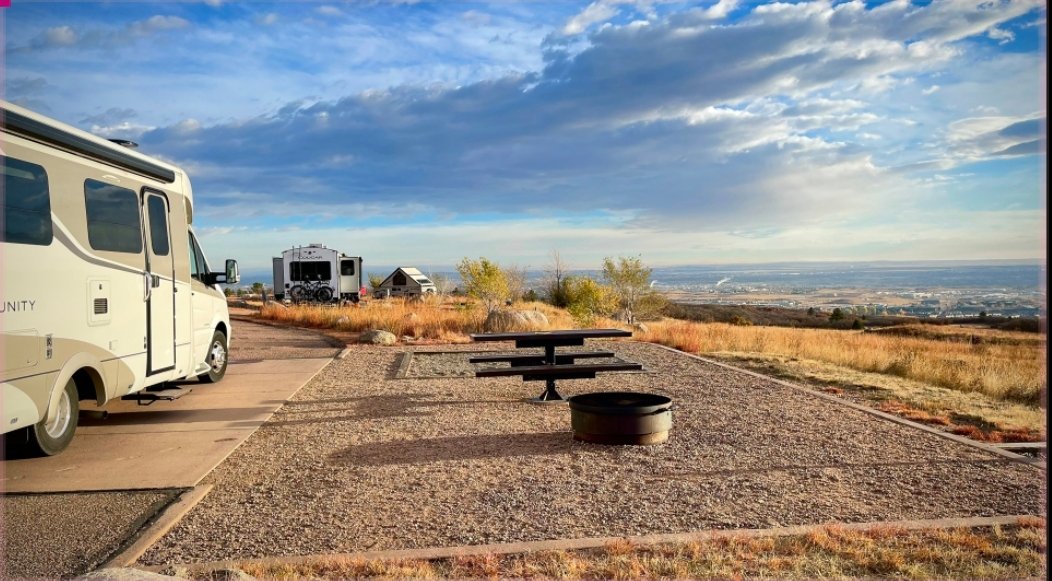
Dry camping, also called boondocking, means camping without any external utility connections. No shore power, no water hookup, no sewer access. You rely entirely on your RV’s onboard resources: your house batteries, fresh water tank, and holding tanks.

It sounds limiting, but for many experienced RVers, dry camping is the most freeing way to travel. You can park on Bureau of Land Management land, national forests, remote desert flats, or a quiet spot miles from the nearest campground. There are no neighbors ten feet away, no campground fees, and no check-in times.

Partial hookup camping sits in the middle, typically offering electricity and water but no sewer connection. You still need to manage your gray and black tanks and visit a dump station when full.

Full Hookup Camping: Pros and Cons

The Advantages

Full hookup camping gives you unlimited utilities. You can run your air conditioning, microwave, and devices freely without watching your power levels. In hot climates especially, this matters enormously.

With a continuous sewer connection, you never need to monitor holding tank levels or make dump station runs mid-trip. If you are new to RVing, full hookups remove a lot of the learning curve and let you focus on enjoying the experience rather than managing systems.

The Drawbacks

Full hookup sites can run anywhere from $40 to $80 or more per night at popular campgrounds, which adds up quickly on extended trips.

Commercial campgrounds with full hookups also tend to be busier and more densely packed. If you are chasing quiet and remote experiences this can feel restrictive. Premium sites fill up fast, especially on weekends and holidays, which limits spontaneous travel.

Dry Camping: Pros and Cons

The Advantages

Dry camping gives you freedom and flexibility that full hookup sites simply cannot match. You can camp almost anywhere legal, from scenic public lands to remote locations most RVers never see.

  • Many dry camping spots are completely free, especially on BLM land and national forests
  • Even over a short trip the savings can be significant
  • Fewer people and fewer rules means the solitude is real

Managing your own power, water, and waste also teaches you how your rig actually works, which makes you a more capable and confident RVer over time.

The Drawbacks

The trade-offs are real though. You need to monitor battery levels, ration water, and watch your tank capacity carefully.

Running an air conditioning unit off batteries alone is not practical without a robust solar or generator setup, which makes dry camping in summer heat require some workarounds. First-timers can find the self-sufficiency aspect overwhelming, so it pays to build experience on shorter trips before committing to extended boondocking.

Which RV Types Suit Each Style?

Your RV plays a big role in which camping style works best for you.

Full hookup camping suits larger rigs naturally, including Class A motorhomes, diesel pushers, and fifth wheels with residential-style appliances, multiple slide-outs, and high power demands. These rigs are built for comfort, and full hookups let them perform at their best.

If you are driving a luxury motorhome, you want to use everything it offers. The team at Vogt RV can help you find a Class A or diesel pusher motorhome fully equipped to make the most of every full hookup campground you visit.

Dry camping is more practical in smaller, lighter rigs such as:

  • Class B campervans
  • Smaller Class C motorhomes
  • Well-equipped travel trailers with solar panels and large battery banks

That said, many larger motorhomes can dry camp effectively if they have been upgraded with solar and sufficient battery capacity.

Cost Comparison

Over a week-long trip, the cost difference between full hookup and dry camping can be dramatic.

  • Full hookup sites average $50 to $65 per night at a mid-range RV park
  • Over seven nights, that is $350 to $455 in campsite fees alone
  • Premium parks near popular destinations can push that even higher

Dry camping on public land is often completely free. Even paid dispersed camping areas or low-fee national forest sites rarely exceed $10 to $20 per night. A week of dry camping could cost you under $100 in site fees.

Of course, dry camping requires upfront investment in solar, batteries, and gear, which can run $1,000 to $5,000 depending on your setup. For frequent travelers though, that investment pays for itself quickly.

How to Decide What Is Right for You

A few questions worth asking yourself before your next trip:

  • How often do you travel? Frequent travelers benefit more from dry camping flexibility while occasional weekend warriors may prefer the ease of full hookups.
  • What size is your rig? Large Class A motorhomes with heavy power demands are harder to sustain off-grid without serious solar investment.
  • Are you traveling with family? Families with children often prefer full hookup campgrounds for amenities like pools, playgrounds, and laundry facilities.
  • How much solitude do you want? If your ideal trip involves waking up to an empty horizon, dry camping is your answer.

New owners almost always benefit from starting with full hookups to build familiarity before adding the complexity of off-grid management.

Many experienced RVers do not choose one exclusively. They mix both styles depending on the trip, spending a week dry camping in a national forest followed by a few nights at a full hookup park to recharge tanks and batteries.

Frequently Asked Questions

Can I dry camp in a large Class A motorhome?

Yes, but it requires preparation. Most Class A motorhomes need upgraded solar panels and a larger battery bank to sustain off-grid camping comfortably, especially if you want to run air conditioning or other high-draw appliances.

How long can I stay at a dry camping spot?

On most Bureau of Land Management land, the standard limit is 14 consecutive days in one location. After that you are required to move at least 25 miles before returning.

Is full hookup camping worth the extra cost?

For beginners, families, and anyone traveling in a large or luxury motorhome, yes. The convenience alone justifies the cost, especially on longer trips where managing off-grid systems would add significant stress.

What is the biggest mistake new dry campers make?

Underestimating water usage. Most first-timers run through their fresh water tank far faster than expected. Low-flow fixtures and conscious habits around dish washing and showering make a big difference.

Do all RV parks offer full hookups?

Not all. Many state parks and public campgrounds offer electric-only or partial hookup sites. Always confirm what is available when booking, especially at popular destinations during peak season.

Conclusion

Full hookup camping offers comfort, convenience, and peace of mind, making it perfect for beginners, full-timers, and anyone who wants to enjoy their RV without worrying about resources.

Dry camping offers freedom, savings, and adventure, and is ideal for those who want to explore off the beaten path and embrace true self-sufficiency.

The good news is you do not have to pick just one. The more you travel, the more naturally you will shift between both styles based on your route, your mood, and what each destination offers.

What matters most is starting with the right RV, one that is built for how you want to live on the road. Whether you are drawn to full hookup luxury or off-grid freedom, Vogt RV has the inventory, expertise, and support to match you with the perfect rig for your travel style.

Whether you’re a first-time RV owner or someone who has been on the road for years, one decision comes up every single trip: where and how are you going to camp?

It sounds simple, but the choice between full hookup camping and dry camping shapes your entire experience. How comfortable you are, how much you spend, how much freedom you feel, and how well your RV performs over time all come down to this one choice.

Neither option is universally better. The right choice depends on your rig, your lifestyle, your budget, and honestly, your personality. This guide breaks down both styles clearly so you can make the call with confidence, and if you’re still shopping for the right setup, Vogt RV is a great place to explore options that match your camping style.

What Is Full Hookup Camping?

Full hookup camping means your RV is connected to three utilities at your campsite: electricity, fresh water, and sewer. You plug into shore power (usually 30-amp or 50-amp), connect your water hose directly to a spigot, and run your sewer line into a drain on site.

The result is a camping experience that feels remarkably close to home. Your air conditioning runs without worrying about battery drain. Your water flows freely. You never have to think about when to dump your tanks.

For many RVers, especially beginners and full-timers, this is the sweet spot between adventure and comfort. Full hookup sites are available at most commercial campgrounds, RV parks, and many state park campgrounds across the country. They tend to be the most in-demand sites, which means booking ahead

is important, especially during peak travel seasons.

What Is Dry Camping?

Dry camping, also called boondocking, means camping without any external utility connections. No shore power, no water hookup, no sewer access. You rely entirely on your RV’s onboard resources: your house batteries, fresh water tank, and holding tanks.

It sounds limiting, but for many experienced RVers, dry camping is the most freeing way to travel. You can park on Bureau of Land Management land, national forests, remote desert flats, or a quiet spot miles from the nearest campground. There are no neighbors ten feet away, no campground fees, and no check-in times.

Partial hookup camping sits in the middle, typically offering electricity and water but no sewer connection. You still need to manage your gray and black tanks and visit a dump station when full.

Full Hookup Camping: Pros and Cons

The Advantages

Full hookup camping gives you unlimited utilities. You can run your air conditioning, microwave, and devices freely without watching your power levels. In hot climates especially, this matters enormously.

With a continuous sewer connection, you never need to monitor holding tank levels or make dump station runs mid-trip. If you are new to RVing, full hookups remove a lot of the learning curve and let you focus on enjoying the experience rather than managing systems.

The Drawbacks

Full hookup sites can run anywhere from $40 to $80 or more per night at popular campgrounds, which adds up quickly on extended trips.

Commercial campgrounds with full hookups also tend to be busier and more densely packed. If you are chasing quiet and remote experiences this can feel restrictive. Premium sites fill up fast, especially on weekends and holidays, which limits spontaneous travel.

Dry Camping: Pros and Cons

The Advantages

Dry camping gives you freedom and flexibility that full hookup sites simply cannot match. You can camp almost anywhere legal, from scenic public lands to remote locations most RVers never see.

  • Many dry camping spots are completely free, especially on BLM land and national forests
  • Even over a short trip the savings can be significant
  • Fewer people and fewer rules means the solitude is real

Managing your own power, water, and waste also teaches you how your rig actually works, which makes you a more capable and confident RVer over time.

The Drawbacks

The trade-offs are real though. You need to monitor battery levels, ration water, and watch your tank capacity carefully.

Running an air conditioning unit off batteries alone is not practical without a robust solar or generator setup, which makes dry camping in summer heat require some workarounds. First-timers can find the self-sufficiency aspect overwhelming, so it pays to build experience on shorter trips before committing to extended boondocking.

Which RV Types Suit Each Style?

Your RV plays a big role in which camping style works best for you.

Full hookup camping suits larger rigs naturally, including Class A motorhomes, diesel pushers, and fifth wheels with residential-style appliances, multiple slide-outs, and high power demands. These rigs are built for comfort, and full hookups let them perform at their best.

If you are driving a luxury motorhome, you want to use everything it offers. The team at Vogt RV can help you find a Class A or diesel pusher motorhome fully equipped to make the most of every full hookup campground you visit.

Dry camping is more practical in smaller, lighter rigs such as:

  • Class B campervans
  • Smaller Class C motorhomes
  • Well-equipped travel trailers with solar panels and large battery banks

That said, many larger motorhomes can dry camp effectively if they have been upgraded with solar and sufficient battery capacity.

Cost Comparison

Over a week-long trip, the cost difference between full hookup and dry camping can be dramatic.

  • Full hookup sites average $50 to $65 per night at a mid-range RV park
  • Over seven nights, that is $350 to $455 in campsite fees alone
  • Premium parks near popular destinations can push that even higher

Dry camping on public land is often completely free. Even paid dispersed camping areas or low-fee national forest sites rarely exceed $10 to $20 per night. A week of dry camping could cost you under $100 in site fees.

Of course, dry camping requires upfront investment in solar, batteries, and gear, which can run $1,000 to $5,000 depending on your setup. For frequent travelers though, that investment pays for itself quickly.

How to Decide What Is Right for You

A few questions worth asking yourself before your next trip:

  • How often do you travel? Frequent travelers benefit more from dry camping flexibility while occasional weekend warriors may prefer the ease of full hookups.
  • What size is your rig? Large Class A motorhomes with heavy power demands are harder to sustain off-grid without serious solar investment.
  • Are you traveling with family? Families with children often prefer full hookup campgrounds for amenities like pools, playgrounds, and laundry facilities.
  • How much solitude do you want? If your ideal trip involves waking up to an empty horizon, dry camping is your answer.

New owners almost always benefit from starting with full hookups to build familiarity before adding the complexity of off-grid management.

Many experienced RVers do not choose one exclusively. They mix both styles depending on the trip, spending a week dry camping in a national forest followed by a few nights at a full hookup park to recharge tanks and batteries.

Frequently Asked Questions

Can I dry camp in a large Class A motorhome?

Yes, but it requires preparation. Most Class A motorhomes need upgraded solar panels and a larger battery bank to sustain off-grid camping comfortably, especially if you want to run air conditioning or other high-draw appliances.

How long can I stay at a dry camping spot?

On most Bureau of Land Management land, the standard limit is 14 consecutive days in one location. After that you are required to move at least 25 miles before returning.

Is full hookup camping worth the extra cost?

For beginners, families, and anyone traveling in a large or luxury motorhome, yes. The convenience alone justifies the cost, especially on longer trips where managing off-grid systems would add significant stress.

What is the biggest mistake new dry campers make?

Underestimating water usage. Most first-timers run through their fresh water tank far faster than expected. Low-flow fixtures and conscious habits around dish washing and showering make a big difference.

Do all RV parks offer full hookups?

Not all. Many state parks and public campgrounds offer electric-only or partial hookup sites. Always confirm what is available when booking, especially at popular destinations during peak season.

Conclusion

Full hookup camping offers comfort, convenience, and peace of mind, making it perfect for beginners, full-timers, and anyone who wants to enjoy their RV without worrying about resources.

Dry camping offers freedom, savings, and adventure, and is ideal for those who want to explore off the beaten path and embrace true self-sufficiency.

The good news is you do not have to pick just one. The more you travel, the more naturally you will shift between both styles based on your route, your mood, and what each destination offers.

What matters most is starting with the right RV, one that is built for how you want to live on the road. Whether you are drawn to full hookup luxury or off-grid freedom, Vogt RV has the inventory, expertise, and support to match you with the perfect rig for your travel style.

Leave a Reply

Your email address will not be published. Required fields are marked *