
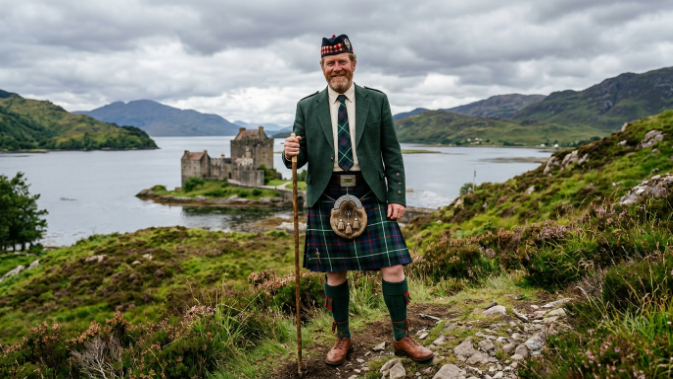
There’s a small but persistent category of search phrases that reveals exactly how much confusion exists around Scottish dress. Phrases like “Scotland male skirt,” “men’s Scottish skirt,” “Scotland skirt for guys” — they all refer to the same garment, but using the same wrong word
The garment isn’t a skirt. It’s a tartankilt. And while this might seem like pedantic vocabulary correction, the difference between calling it a kilt versus calling it a skirt isn’t just about semantics. It reflects a fundamental misunderstanding of what the garment is, where it comes from, and what wearing it means.
If you’ve found yourself typing “Scotland male skirt” into a search engine because you weren’t sure what else to call the garment, you’re not alone. Most non-Scots learn this word from confusion rather than from cultural exposure. But once you understand why the kilt isn’t a skirt, the world of Scottish dress opens up in a way it didn’t before.
Here’s what the words actually mean, why they matter, and how to talk about Scottish dress correctly.
The Etymological Difference
The word “skirt” comes from the Old Norse skyrta, originally meaning a shirt or tunic. Over centuries, English narrowed the meaning to refer specifically to a garment hanging from the waist, typically associated with women’s wear in modern usage.
The word “kilt” comes from the Scots verb kilt, meaning to tuck up or gather around the body — derived from older Scandinavian and Germanic roots referring to the act of bundling fabric. The verb described what you did with a length of cloth to create the garment. The noun “kilt” is what you ended up with.
Already, the words point to different things. A skirt is a garment defined by its silhouette. A kilt is a garment defined by its construction — the specific act of pleating, wrapping, and binding fabric in a particular way.
A long woolen length pleated and wrapped around the waist creates a kilt regardless of who wears it. A garment with a closed waistband and stitched sides hanging from the hip is a skirt. The construction is fundamentally different.
This is why even modern utility kilts and sport kilts are kilts, not skirts — they preserve the wrap-and-pleat construction principle even when the materials and silhouette have evolved.
What a Tartankilt Actually Is
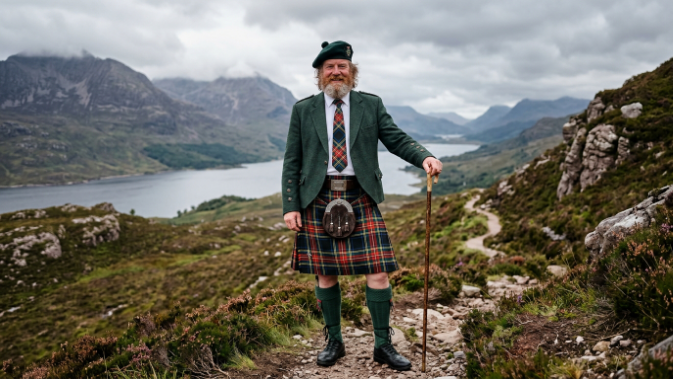
A traditional tartankilt is composed of specific construction elements:
- Length of tartan-patterned wool fabric, typically 5 or 8 yards long
- Knife-pleated at the back (deep, sharp folds running parallel)
- Flat apron at the front (the wrapping outer panel)
- Buckle-and-strap closure (not a fitted waistband)
- Sized to the natural waist (above the navel)
- Hangs to mid-knee (specific length, not adjustable)
- No stitching joining sides (the kilt opens completely when unbuckled)
A skirt, by contrast, has:
- A fitted waistband
- Stitched sides
- Variable length (knee, midi, maxi)
- Often a zipper or hook closure
- Often fully or partially fitted to body shape
The kilt and the skirt share a basic visual category — both are garments that wrap below the waist and hang to a length — but the construction principles are entirely different.
This matters because the construction creates the kilt’s distinctive movement. The pleats swing as a coordinated unit. The apron sits flat across the front. The garment has weight and presence in motion that no fitted skirt construction can replicate.
The Cultural Weight Difference
Beyond construction, the words carry dramatically different cultural weight.
A skirt is, in modern Western usage, primarily a women’s garment. Calling a man’s traditional Highland wear a “Scotland male skirt” implicitly genders the garment in a way that erases its actual cultural identity.
A kilt is a specific garment with a specific cultural origin. It’s worn by men, women (in skirted versions), and children in Scottish heritage communities. The word itself is gender-neutral and culture-specific.
Using “Scotland male skirt” instead of “kilt” does two things wrong simultaneously: it frames the garment in feminine terms and then qualifies it with a gender modifier to compensate. The result is a phrase that gets the basic identity of the garment exactly backwards.
For Scottish men, this matters significantly. Asking “do you wear a Scotland male skirt at weddings?” is the rough equivalent of asking a Japanese man “do you wear an Asian male robe?” instead of asking about a kimono.
Why People Make This Mistake
The “Scotland male skirt” search phrase exists because of a real linguistic gap. Many non-Scots have only seen kilts in passing — in films, at one wedding, in souvenir photos. They never learned the word “kilt” formally.
Three things drive this:
- Limited cultural exposure
- Visual gender assumptions about skirts
- Search behavior of first-time buyers
The result is a phrase that’s logical but culturally inaccurate.
Tartankilt: The Specific Subtype
Within the kilt category, “tartankilt” is a specific subtype distinguished by fabric pattern.
A kilt without tartan is still a kilt — but a tartan kilt is specifically made from tartan-patterned fabric, with centuries of heritage behind it.
Tartan itself is a woven pattern with a structured “sett.” There are over 25,000 registered tartans in Scotland.
So when someone searches “Scotland male skirt,” they’re almost always thinking of a tartan kilt — not just any garment.
The History the Skirt Word Erases
When you call a tartankilt a “Scotland male skirt,” you erase centuries of history.
The kilt evolved from the féileadh mòr (great kilt), a 9-yard belted plaid worn by Highlanders as both clothing and cloak. It was functional, military, and cultural — not decorative.
That history cannot be reduced to the word “skirt.”
How Scottish Speakers Actually Talk About It
In Scotland, you hear:
- Kilt
- Tartan
- Highland dress
- Modern kilt
- Belted plaid
You never hear:
- “Scotland male skirt”
Talking About It Correctly
Use:
- Kilt
- Tartankilt
- Highland dress
Avoid:
- Skirt (in this context)
Frequently Asked Questions
Is it offensive to call a kilt a skirt?
Mildly inappropriate, but usually corrected politely.
Why does it matter?
Because language shapes cultural understanding.
Are female kilts still called kilts?
Yes.
It’s a tartankilt, not a “Scotland male skirt.” Now you know — and now you can talk about Scottish dress correctly.