

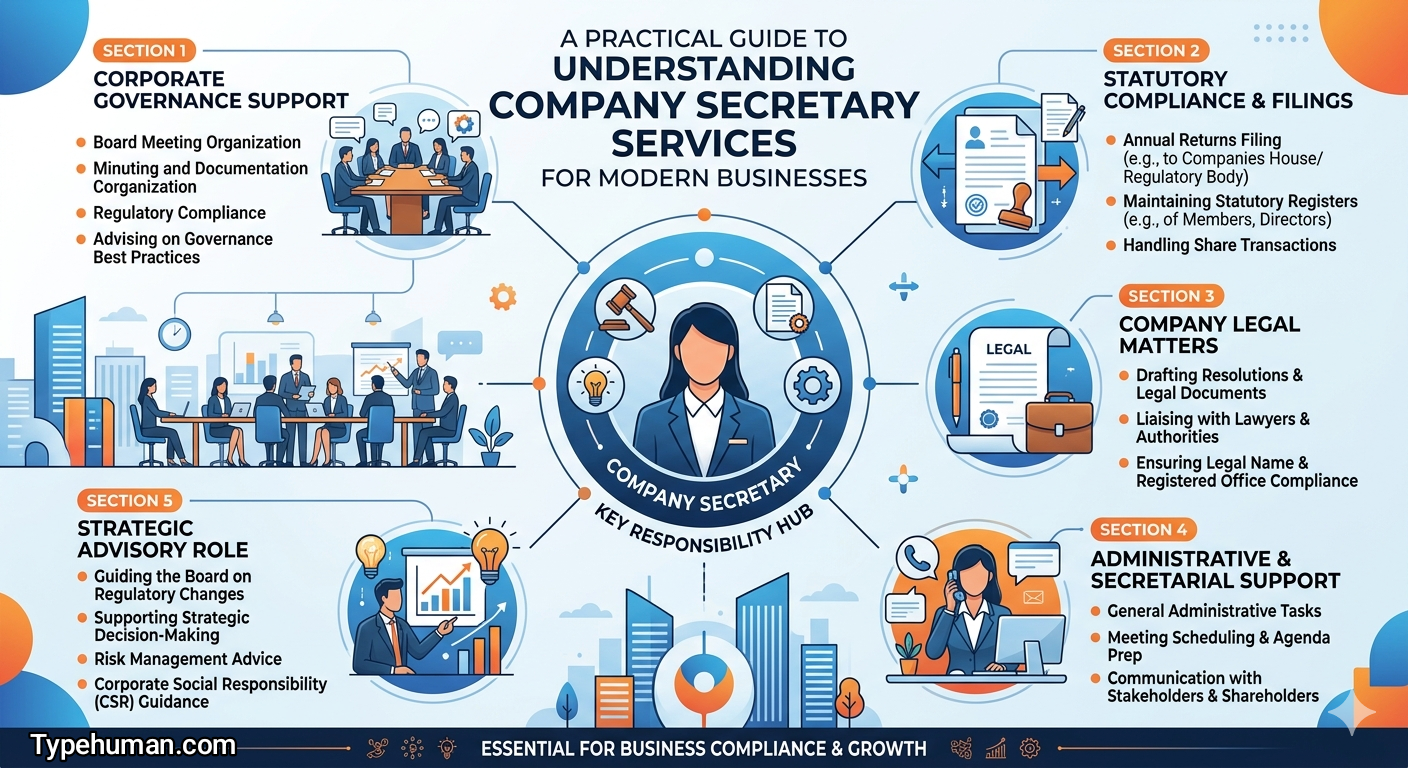
Running a modern business involves more than developing great products or delivering excellent services. Behind the scenes, companies must handle a wide range of administrative and legal responsibilities that keep operations compliant and organized. One of the key roles in managing these responsibilities is the company secretary.
While the title might sound formal or even old-fashioned, the work involved is highly relevant for today’s businesses. Company secretaries help ensure that organizations comply with legal requirements, maintain accurate records, and remain organized when dealing with regulatory authorities.
For growing businesses, understanding how company secretary services work can make a big difference in maintaining smooth operations and avoiding unnecessary complications.
What Company Secretary Services Actually Do
At its core, a company secretary’s work focuses on corporate governance and administrative compliance. Corporate governance refers to the system of rules, processes, and practices that guide how a company is managed and controlled.
Professionals in this role help businesses meet legal requirements while ensuring internal processes remain organized and transparent. This includes maintaining company records, preparing documentation for important decisions, and ensuring regulatory obligations are met.
The broader concept of corporate governance highlights how businesses maintain accountability and transparency in their operations.
In practical terms, company secretaries help with tasks such as:
- Maintaining official company registers
- Preparing and filing regulatory documents
- Coordinating shareholder or director meetings
- Recording meeting minutes and resolutions
- Updating business records when changes occur
These tasks might sound administrative, but they are critical to ensuring that a company operates legally and responsibly.
Supporting Business Compliance and Organization
Modern businesses operate in a regulatory environment where accuracy and compliance are essential. Governments require companies to keep certain records up to date and to submit documentation when major changes occur.
For example, if a company appoints a new director, issues additional shares, or changes its registered address, these updates typically need to be formally recorded and reported.
Without proper documentation, businesses could face delays, penalties, or legal complications.
Company secretary services help prevent these issues by ensuring that records are maintained accurately and submitted on time.
Consider a growing technology startup. As the company expands, it might add investors, appoint new board members, or restructure its share ownership. Each of these changes requires proper documentation.
Instead of the founders managing these tasks themselves—while also running the business—company secretary professionals can oversee the administrative details.
This allows business owners to focus on strategy, product development, and customer relationships while knowing compliance matters are being handled correctly.
Helping Businesses Stay Focused on Growth
One of the biggest advantages of company secretary services is that they allow business leaders to focus on what they do best.
Entrepreneurs often start businesses because they are passionate about an idea or industry. They might be skilled designers, engineers, marketers, or consultants—but not necessarily experts in corporate administration.
Administrative obligations, while important, can take significant time and attention.
For example, a consulting firm expanding into new markets might need to update shareholder records, issue new shares to investors, and ensure compliance with reporting requirements. Managing these responsibilities internally can distract from the company’s primary goals.
By delegating these tasks to professionals, companies can streamline their operations.
This concept is common in many industries. Just as businesses rely on accountants for financial management and lawyers for legal matters, company secretary services help manage governance and administrative responsibilities.
This specialized support ensures that businesses remain compliant while continuing to grow.
Maintaining Transparency and Trust
Another key function of company secretary services is supporting transparency and trust within an organization.
When companies maintain accurate records and follow governance procedures, stakeholders—such as investors, employees, and partners—can have confidence in the organization.
For example, when a company holds a board or shareholder meeting, the discussions and decisions made must be formally recorded. These records provide a clear history of how decisions were made.
This documentation becomes particularly important when companies seek funding, expand internationally, or undergo audits.
Transparent recordkeeping demonstrates that a company operates responsibly and follows established governance practices.
Many businesses exploring governance support solutions often consider options like company secretary services in Sydney to help maintain compliance and manage corporate documentation efficiently.
Professional support can make governance processes much smoother, especially as companies grow and regulatory requirements become more complex.
Supporting Companies at Every Stage
Company secretary services are not only useful for large corporations. Businesses at nearly every stage can benefit from this support.
For startups, these services can assist with initial company setup, ensuring that the necessary records and documentation are established correctly from the beginning.
Small businesses may rely on company secretary support when appointing directors, issuing shares, or updating company structures as they grow.
Established companies often require ongoing governance management, including meeting coordination, documentation preparation, and compliance reporting.
In each case, the goal remains the same: helping businesses maintain organized records and meet regulatory obligations.
Think of company secretary services as the organizational backbone of a company. While they may operate behind the scenes, their work helps ensure that the company runs smoothly and responsibly.
Adapting to Modern Business Needs
As businesses evolve, so do the responsibilities associated with governance and compliance.
Modern companies often operate across multiple locations, work with international investors, or adopt digital management systems. These developments can make governance processes more complex.
Technology has also changed how documentation and compliance are managed. Digital recordkeeping, secure communication platforms, and automated filing systems have become common tools in corporate administration.
Company secretary professionals increasingly use these technologies to streamline processes and maintain accurate records.
For example, electronic document management systems allow companies to store governance records securely while making them easily accessible when needed.
These tools help businesses maintain efficiency without compromising compliance standards.
Final Thoughts
Company secretary services play an important role in helping modern businesses stay organized, compliant, and transparent.
While these responsibilities often take place behind the scenes, they form a critical part of corporate governance and administrative management.
From maintaining company records to coordinating board meetings and ensuring regulatory filings are completed correctly, company secretary professionals support businesses in navigating complex compliance requirements.
For entrepreneurs and business leaders, having reliable governance support means they can focus on innovation, strategy, and growth—while knowing that the company’s administrative foundation remains strong.
In today’s fast-moving business environment, that kind of structured support can make a significant difference in building a stable and successful organization.
 prime star
  apexbacklinksagency@gmail.com