

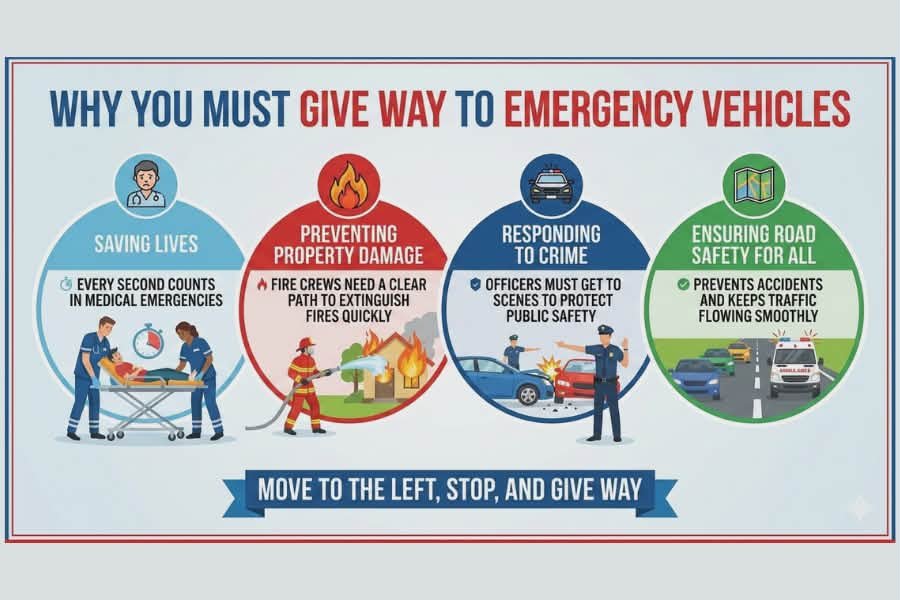
What’s the Article About? Giving way to emergency vehicles is a legal duty and a life-saving act. Calm, correct responses reduce delays and prevent accidents. Driver education and every driving lesson help build this essential road habit.
Whenever you’re en route to a place, you might come across an emergency vehicle. Quite a few times, the flashing lights or continuous sirens alarm you about the passing of such a vehicle. But why and how is this important at the moment? It’s because some of the drivers hesitate, panic, or respond incorrectly when an emergency vehicle passes. Many driving school, like Onroad Driving Education, teach their driver students about the emergency vehicles and the governmental laws that state that such vehicles should be given way, regardless of any situation.
Understanding why such a rule is prevalent and how to act in such a situation is important to know. And it’s not about just knowledge, but more about how to become a responsible and aware driver.
It’s The Law
Although it’s a legal obligation to make way for the emergency vehicles, it’s also a human conscience to do so. Such vehicles are deemed to provide instant services that need fast-paced and quick action. And after all this, it’s a basic law to let emergency vehicles slide off. Traffic laws also require the general public and drivers to safely move aside when an authorised emergency transporter approaches with flashing lights and sirens activated.
In hindsight, such laws are also devised to keep law and order maintained for road safety and security. Just like how speed limits and seatbelts protect drivers and passengers, making way for emergency vehicles makes sure that they carry out their jobs properly. Many Sydney driving schools have devised a proper government rules and regulations book which states and educates new learners about the same.
Every Second Counts
Emergency vehicles operate on each pounding heartbeat. It means that their motive to serve the people’s needs needs to be rapid action without delays and carried out successfully, given the severity of such an operation. In those ambulances, firefighters, and police cars mostly address critical situations; therefore, their time is not just valuable but lifesaving. A delay of even a second can cost lives.
By providing them with a prompt way in the middle of road traffic, chaos, and mistakes, you might be saving a precious life, either riding in the vehicle or waiting for it. Driver education programmes like the Safer Drivers Course by Onroad Driving Education are designed to reinforce this mindset. They not only equip their learners with proper, legally compliant lessons but also influence their decisions that broaden their perspectives to make sensible decisions.
Safety First
It’s not really about just giving space to the emergency vehicles to manoeuvre through the traffic, but about safety, too. How? The rapid-action vehicles need to be quick; in such cases, when people make way for the vehicles after getting alarmed about their arrival, it makes sure that not just the emergency crews but also the general public does not face any discrepancy.
It might’ve come to your notice that a panicked public will wither and get lost in making way for the emergency crews, but those who are calm and composed will always address the situation meticulously and peacefully. Although it is not entirely because of the driving lesson, they help in developing judgement and confidence during such times.
What Should You Do
Knowing how to drive and how to do it safely are two different things. The solution to how a driver can make way for the emergency vehicle is by not fearing or losing confidence. It is one of the most important driving lessons stated below:
Stay Calm: Panic leads to underconfidence, further leading to poor decisions. When in a turbulent situation, take a deep breath, assess your surroundings, and respond calmly.
Move Left Safely: To make way seamlessly, signal and merge on the left side whenever possible. Sudden movements can lead to chaos, confusing other drivers, too.
Don’t Block Intersections: Whenever approaching an intersection, try to continue through rather than stopping midway and obstructing the path.
Don’t Stop Suddenly: Abrupt or sudden braking can trigger other drivers and lead to accidents. Always be prepared and foresee a situation, and slow down gradually by positioning your vehicle safely.
We’re All In This Together
It’s true. Driving is a shared responsibility that talks about coexistence, sharing, and empathy towards each other. Every person on the road has a duty, and that comes along together in such cases, as that of the emergency vehicles. Making way for such vehicles that also provide aid to the ailing is a contributing force that forges harmony, understanding, and love amongst each other.
Driving isn’t about reaching the preferred destination but also about contributing to everyone’s well-being while en route. Most importantly, such behaviour of helping each other sets a standard. When experienced drivers respond correctly, the newbies who have been admitted to their driving lesson also learn and adopt such habits. So, whether you’re a seasoned pro or going to enrol in your first lesson with Onroad Driving Education, the basic principle of staying aware, calm, and alert will always remain the same. And that’s why,
Next time you see the glaring lights, move aside. It will truly make a difference.