

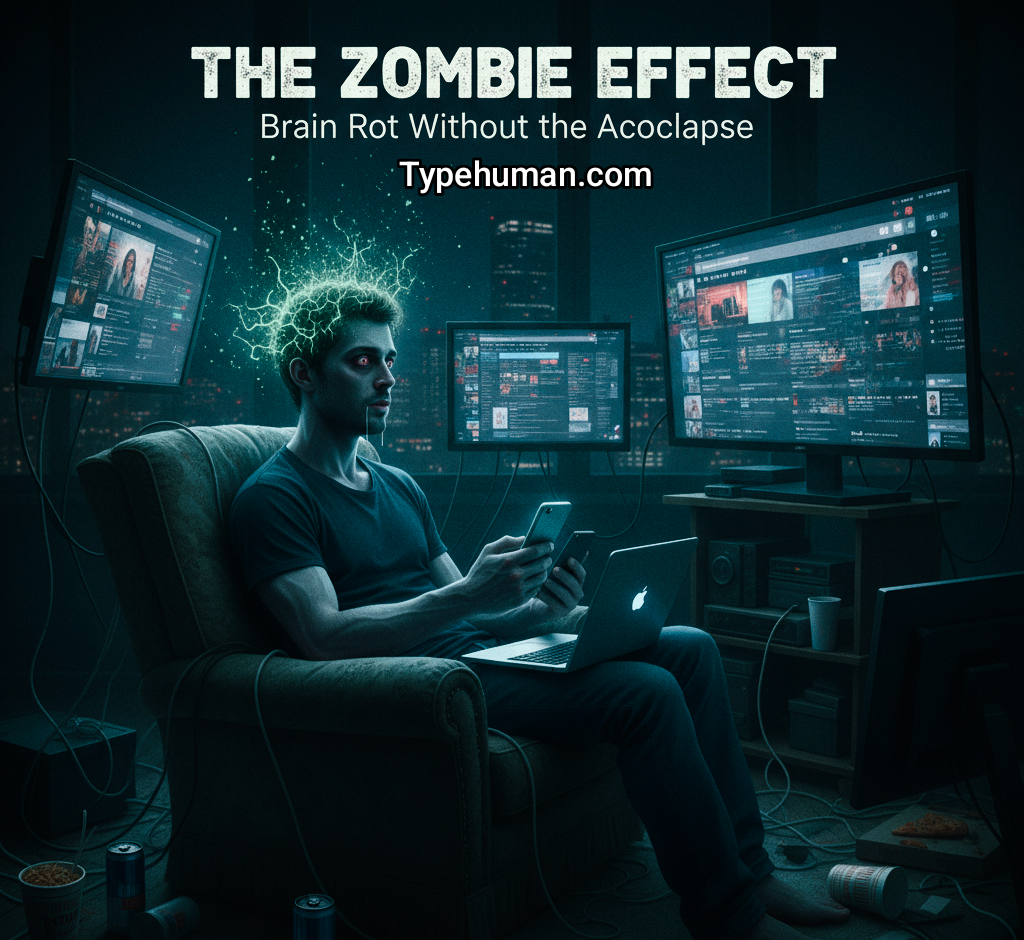
Something feels off lately.
Like a slow fade.
Focus slips faster than it used to.
Sleep happens, but it does not reset anything.
Stress lingers, even on days when nothing is actually wrong.
People joke and call it brain rot.
But the feeling itself is hard to ignore.
If this were a zombie movie, the cause would be apparent.
Panic.
Chaos.
Survival.
Anyone would fall apart under that kind of pressure.
Real life is quieter than that.
No sirens.
No jump scares.
Just notifications.
Deadlines.
Late nights.
And a constant mental buzz that never entirely shuts off.
The brain does not care that everything looks normal. It still responds as if something is always happening.
Interestingly, this kind of mental fog and low-grade exhaustion often shows up as one of the 11 warning signs of magnesium deficiency.
Not as a diagnosis. Just as a clue worth paying attention to.
Living in Survival Mode Without Realizing It
The human nervous system was built for short bursts of stress. A threat appears. The body reacts.
Once the danger passes, everything settles and repairs itself. That cycle is how balance is supposed to work.
The problem is that modern stress rarely shuts off.
The zombie effect starts slowly, with fading mental clarity, reduced emotional patience, and signs such as forgetfulness and difficulty concentrating.
Why Brain Rot Is Not Just a Joke
Calling it brain rot sounds harmless and almost funny.
But what people are describing is often a real physical state. Mental fatigue layered on top of chronic stress and poor recovery.
The brain uses more energy than most people realize. It depends on a steady supply of nutrients to regulate focus, mood, sleep, and stress responses.
When stress becomes constant, those resources are burned faster than they can be replaced.
Most people try to fix burnout by pushing harder, but they end up digging the hole deeper.
Real recovery comes from support, not effort, and once you see that, the way forward becomes obvious.
The Quiet Role Magnesium Plays
Magnesium quietly supports hundreds of body processes, especially in the nervous system, helping nerves fire properly and muscles relax, which helps stress recovery and helps you feel more balanced.
Under prolonged stress, magnesium is used up more quickly. At the same time, modern diets and busy routines do not always replace it effectively. The result is not a sudden breakdown; it is a subtle strain.
That strain often manifests subtly as mental fog, tension, or restlessness-small signs that can easily go unnoticed but are vital for you to recognize and trust in your experience.
Why These Signals Are Easy to Miss
One reason this goes unnoticed is that it blends into daily life. Being tired feels normal. Being stressed feels expected. Poor sleep gets blamed on schedules or age. When everyone around you feels the same way, it is easy to assume this is just how life works.
Another reason is that the change happens slowly. There is no moment when the brain stops working. It works less efficiently over time. The shift is gradual enough to adapt to, but real enough to affect quality of life.
In movies, characters instantly notice that something is off and wrong. In real life, we normalize it until we can’t handle it anymore.
Stress, Screens, and the Illusion of Rest
Modern rest often looks like recovery, but it rarely is.
Scrolling does not calm the nervous system.
Background noise does not signal safety.
Late nights in front of screens make it harder for the brain to slow down.
Even when the body stops moving, the brain stays alert. Recovery never fully kicks in. That matters because repair happens during rest, not during effort.
Magnesium supports the systems that allow the nervous system to shift out of alert mode. When those systems are strained, sleep becomes lighter, stress feels sharper, and rest never quite feels complete.
Why This Matters More Than We Think
The zombie effect does not turn people into something unrecognizable.
It slowly reduces capacity. Less focus. Less patience. Less resilience. Over time, that affects work, relationships, decision-making, and health.
When the brain is constantly compensating, everything takes more effort. And it only adds to the stress, deepening the cycle. Without addressing what the body needs to recover, it becomes harder to break.
The zombie effect is linked to nutrition, so supporting the brain with proper nutrients can help you feel more in control of your recovery and resilience, beyond just habits and routines.
A More Grounded Way to Think About Brain Health
The goal is not optimization or perfection. It is support.
Mental clarity and calm are not just mental states. They are physical ones. When the brain has what it needs, focus feels easier. Stress feels manageable. Rest actually restores.
Instead of asking why focus feels harder than it used to, it may be worth asking what the brain has been handling nonstop and what it needs to recover from that load.
The Shift Out of Survival Mode
The good news is that this state is not permanent.
And it is not complicated.
Sometimes the difference between feeling foggy and feeling clear comes down to support, not effort.
Something as simple as magnesium can help the nervous system slow down, recover, and reset.
Not overnight. Not magically.
Just enough to take the edge off.
Enough to help the brain step out of survival mode.
You do not need to push harder.
You do not need an apocalypse to justify feeling this way.
You just need to give your body what it has been quietly asking for.