

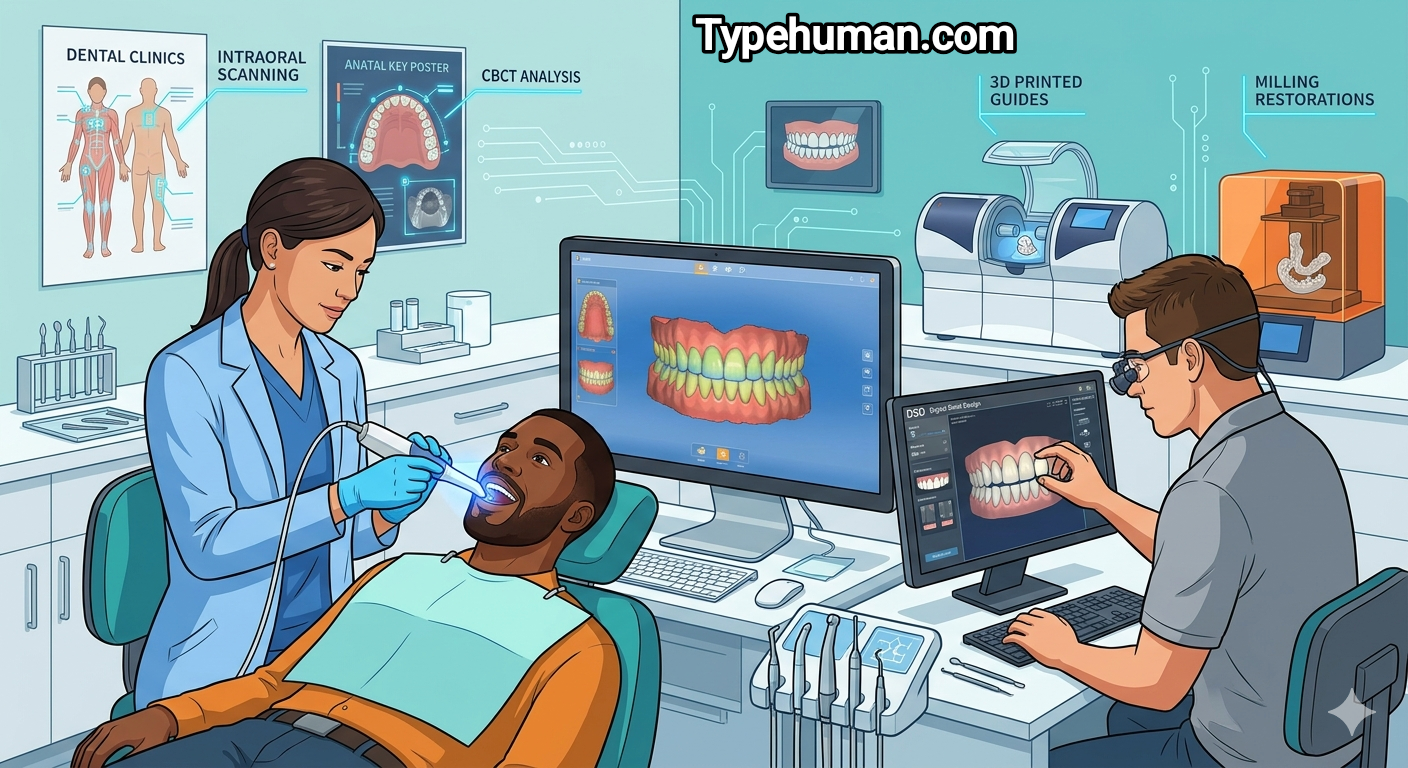
Dentistry has evolved significantly over the past few decades. What was once a field that relied mostly on manual impressions, physical molds, and time-consuming adjustments has now embraced advanced digital tools that enable faster, more precise, and more comfortable treatments for patients.
One of the most important developments in modern dentistry is digital design. By using specialized software and digital scanning technology, dental professionals can plan treatments with remarkable accuracy and produce restorations that fit naturally with a patient’s teeth.
For dentists, digital design improves efficiency and collaboration. For patients, it often means fewer appointments, better-fitting restorations, and more predictable results.
Let’s explore how digital design is transforming dental practices and why it has become such an important part of modern dental care.
From Traditional Impressions to Digital Scanning
For many years, dentists relied on traditional impressions to capture the shape of a patient’s teeth. This process involved filling a tray with impression material and placing it in the patient’s mouth until it hardened.
While effective, the process wasn’t always comfortable and could sometimes produce slight inaccuracies if the impression shifted or contained air bubbles.
Today, many dental clinics use digital scanners instead. These devices capture highly detailed images of the patient’s teeth and gums in just a few minutes. The scanner creates a precise 3D model that can be used to design crowns, bridges, aligners, and other restorations.
For example, imagine a patient who needs a dental crown. Instead of taking multiple physical molds, the dentist can digitally scan the tooth. The result is an accurate digital model that shows every detail of the tooth’s shape and alignment.
These digital models allow dental professionals to plan treatments with greater confidence and reduce the likelihood of errors.
This shift toward digital workflows is part of the broader movement known as digital dentistry, which uses computer technology to improve diagnosis, treatment planning, and restoration design.
By replacing traditional impressions with digital scans, dental practices can provide more comfortable, precise care.
Improving Precision Through Digital Design Tools
Once a digital scan is created, the next step is to design the restoration using specialized software. This is where digital design truly makes a difference.
Dental design software allows technicians and dentists to visualize the final restoration before it is produced. They can adjust the shape, alignment, and proportions of the restoration to ensure that it fits naturally with the surrounding teeth.
For instance, when creating a dental veneer for a front tooth, the design software allows technicians to analyze how the restoration will look when the patient smiles. They can adjust color, contour, and alignment to achieve a natural appearance.
Precision is especially important in dentistry because even small variations can affect how teeth fit together. If a restoration is slightly too high or misaligned, it can cause discomfort or place unnecessary pressure on other teeth.
Digital design tools reduce these risks by allowing technicians to simulate how the restoration will interact with the patient’s bite before it is manufactured.
This level of precision is similar to the design process used in industries such as automotive manufacturing or aerospace engineering, where digital modeling ensures that components fit together perfectly before production begins.
By applying the same principles to dentistry, digital design helps produce restorations that are both accurate and comfortable.
Enhancing Collaboration Between Dentists and Laboratories
Another major advantage of digital design is improved collaboration between dental clinics and dental laboratories.
In traditional workflows, dentists would send physical molds and handwritten instructions to laboratories. If adjustments were needed, the process could take additional time because materials had to be shipped back and forth.
Digital design eliminates many of these delays.
When a dentist scans a patient’s teeth, the digital files can be sent to a laboratory instantly. Technicians can review the scan, design the restoration using specialized software, and communicate directly with the dentist if clarification is needed.
For example, if a technician notices that the bite alignment may need adjustment, they can discuss the design with the dentist before manufacturing begins.
This collaborative approach helps ensure that the final restoration meets both functional and aesthetic expectations.
Dental professionals interested in learning more about advanced design workflows and restoration planning can explore resources related to digital design for dental practices, which highlight how digital tools support modern treatment planning and laboratory collaboration.
By sharing digital models and designs in real time, dental teams can work more efficiently and reduce the risk of errors.
Making Dental Treatments More Efficient
Efficiency is another important benefit of digital design. Traditional dental restoration processes often required multiple appointments because physical impressions had to be sent to laboratories and restorations needed to be adjusted after production.
With digital design systems, many of these steps become faster and more streamlined.
For example, a dentist may scan a patient’s teeth during a single appointment and send the digital files to a laboratory immediately. Technicians can begin designing the restoration immediately, reducing overall turnaround time.
When the restoration arrives at the dental clinic, it often fits more accurately because it was designed using precise digital measurements.
This efficiency benefits both dentists and patients.
Patients spend less time waiting for restorations, while dentists can manage their schedules more effectively. Faster production also allows clinics to treat more patients without sacrificing quality.
Digital design workflows have also reduced the need for adjustments during placement. Because restorations are designed with accurate digital models, they often fit the first time correctly.
This reduces chair time and improves the overall treatment experience.
Improving Patient Communication and Confidence
Digital design tools also make it easier for dentists to communicate treatment plans with patients.
For many people, dental procedures can feel uncertain or intimidating. When patients cannot visualize the outcome of a treatment, they may hesitate to move forward.
Digital design software allows dentists to show patients a visual representation of their future smile.
For example, when planning cosmetic treatments such as veneers or smile makeovers, dentists can use digital models to demonstrate how the final result might look.
Patients can see changes in tooth shape, alignment, and spacing before the procedure begins.
This transparency helps patients feel more confident about their treatment decisions.
The same approach is used in other industries where visual planning improves decision-making. For instance, architects often present 3D renderings of buildings before construction begins, helping clients understand the final design.
Similarly, digital smile design gives dental patients a clearer understanding of what to expect from their treatment.
Supporting the Future of Modern Dentistry
As technology continues to advance, digital design will likely play an even greater role in dental practices.
Innovations such as artificial intelligence, improved scanning technologies, and advanced manufacturing systems are already shaping the future of dental restorations.
These developments will allow dental professionals to design restorations with even greater precision while further improving efficiency.
For patients, this means treatments that are more comfortable, faster, and tailored to their individual needs.
For dentists and dental laboratories, digital design represents an opportunity to collaborate more effectively and deliver consistently high-quality results.
A New Standard for Precision and Efficiency
Digital design has transformed how dental practices plan and deliver treatments. By combining digital scanning, advanced software, and collaborative workflows, dental professionals can create restorations that fit more accurately and look more natural.
These technologies reduce treatment time, improve communication between dentists and laboratories, and enhance the overall patient experience.
As digital tools continue to evolve, they will remain an essential part of modern dentistry—helping dental professionals deliver precise, efficient, and patient-centered care.
Ultimately, digital design is not just about technology. It’s about improving how dentists restore smiles and ensuring patients receive the highest standard of care possible.
 prime star