

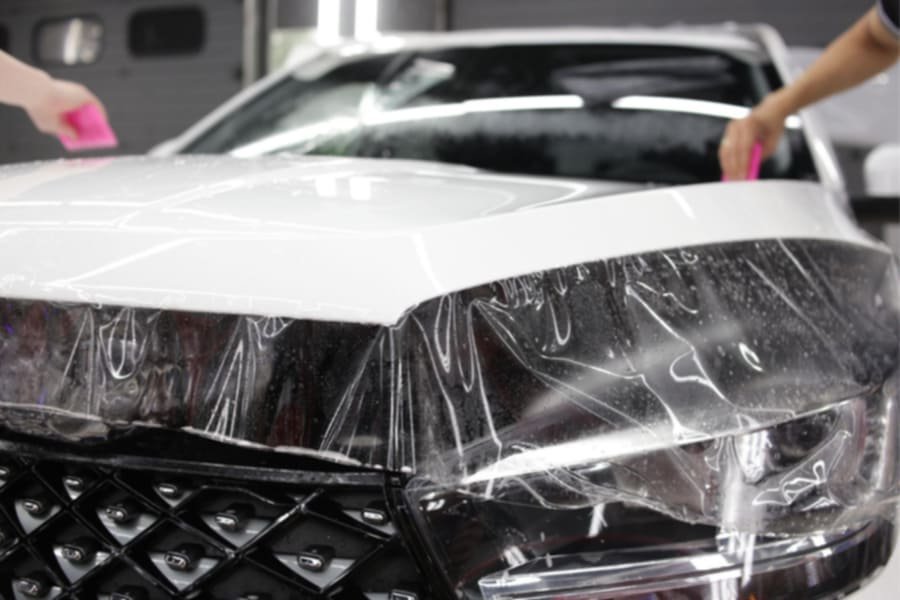
If you recently bought a new automobile in Canada, you likely still enjoy the “new car smell” and the factory-fresh finish. But any experienced Canadian motorist would tell you that our highways are like a war zone. Your car’s exterior is always under assault from gravel spray on the , the never-ending road salt in Ontario, and construction debris on the Deerfoot.
Many owners are hesitant to buy a ppf wrap because they see it as an extra luxury. But the “real cost” of not protecting your car’s paint isn’t just a few stone chips; it is a long-term drain on your finances you may not see coming.
1. Death by a Thousand Stone Chips
In Canada, winter traction means that every major roadway is treated with sand and small stones. Without paint protection film, these tiny pieces act like bullets, sandblasting your hood and front bumper.
The Hidden Cost
Fixing professional paint isn’t as easy as using a $20 touch-up pen. To ensure the colour matches, you may need to repaint the entire panels to match the current metallic or pearl finishes. A single respray of the hood and bumper may cost between $1,500 and $3,000. When you consider how much it costs to install a paint protection film on an automobile, the film begins to feel more like an insurance policy than a cost.
2. The “Salt Fever” and Rust
We enjoy our roads that are safe and free of ice, but our automobiles don’t like the brine. Salt on the road is quite corrosive. Salt and moisture can enter after a stone chip breaks through your clear coat and reaches the bare metal.
The Hidden Cost
A little “pockmark” in December may grow into a boiling rust spot by April. Repairing rust is costly and not always permanent; once oxidation begins, it is hard to stop. Paint protection film creates an airtight, impermeable barrier, so salt never reaches the vulnerable areas of your car.
3. The Value of Resale Nose-Dive
You will likely want to sell or trade in your car at some point. In the used automobile market, “first impressions” may be worth a lot of money. An automobile with “road rash” (hundreds of small white chips on the front end) indicates the owner drove it hard and didn’t take care of it properly.
The Hidden Cost
Dealerships and private purchasers will utilize paint flaws to get you to lower your asking price by thousands of dollars. According to statistics, a car with clean, protected paint might sell for up to 15% more than one with apparent damage. If you buy a PPF wrap now, you are effectively paying for a larger bill later.
PPF vs. The Elements: How It Works
Paint protection film is a thick, high-tech urethane barrier, unlike wax or ceramic coatings, which are thin chemical layers. Most high-end films even have “self-healing” properties, meaning scratches and swirls will fade when exposed to sunlight or warm water.
For Canadians who want to protect their investment, the maths is simple: the film costs far less than the cost of painting repairs, removing rust, and losing resale value. InstaTints offers expert PPF wrap installations designed to last in the harshest Canadian conditions, so your car will always look like it just came out of the dealership.
The Bottom Line
If you don’t protect your car’s paint, you are taking a risk that won’t pay off. The cost of a car paint protection may seem high at first, but the alternative is that your second most important possession will slowly and expensively lose value.
A little amount of protection goes a long way in a place with ice, salt, and gravel.
 HD Backlinks