

A 4K ultra-high-definition movie is transcoded on a server in New York. Almost simultaneously, a fiber optic signal travels across the Pacific Ocean and is precisely received in a data center in Shanghai. These two seemingly unrelated processes reveal the familiar yet unfamiliar concept of a “media converter,” which is changing our digital lives in two drastically different ways.
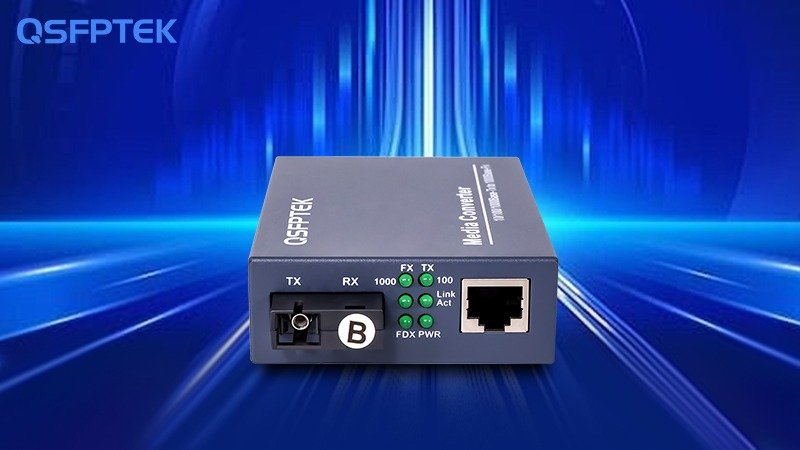
When you talk about a media converter, you might first think of software that converts video from one format to another. But in the technology field, this term also points to another equally important but often overlooked world—network hardware.
Conceptual Divergence
In the digital technology field, the term “media converter” actually runs on two parallel tracks, serving different needs while sharing the core concept of “format conversion.”
On one hand, there are software services, such as Amazon Web Services’ AWS Elemental MediaConvert, a file-based video transcoding service. These services can convert video content from one format to another to suit the needs of different devices and platforms, supporting everything from simple mobile videos to professional broadcast-grade content.
On the other hand, there are physical devices. On websites like DigiKey, electronic component distributors categorize media converters as network devices. The primary function of these hardware devices is to convert signals between different network media, such as converting Ethernet cable signals to fiber optic signals.
Network Converters
Copper to Fiber Media Converter acts as “translators” between different network media, most commonly bridging copper Ethernet and fiber optic networks. This conversion involves more than just simple signal forwarding; it also involves complex protocol adaptation and signal optimization processes.
Typical network media converters have multiple interface types, such as video input interfaces, coaxial digital audio ports, stereo audio ports, and HDMI outputs. In terms of electrical specifications, these devices are typically low-power, such as 5W, powered by DC 5V, and have a compact design.
Market Demand
With the acceleration of global digital transformation, enterprises’ demand for efficient and reliable network connectivity is growing exponentially. This demand directly drives the expansion of the network media converter market.
Behind this expansion are several key trends: remote work becoming the norm, the surge in IoT devices, the widespread adoption of cloud services, and the continued construction of data centers. Every trend demands more efficient and reliable network connectivity, and media converters are one of the fundamental components to meet these needs.
Especially in long-distance data transmission scenarios, fiber optics has become the preferred medium due to its high bandwidth and interference resistance. However, most terminal devices still rely on traditional copper cable interfaces, creating an opportunity for media converters.
Industry Future
Looking ahead, the development paths of the two media converters will continue to diverge, but both are likely to evolve towards intelligence and integration.
For network hardware media converters, the demand for high-performance, low-power conversion devices will continue to rise with the full deployment of 5G networks and the explosive growth of IoT devices. Future products may integrate more intelligent functions, such as automatic fault detection, remote management, and energy efficiency optimization.
Video transcoding services will place greater emphasis on the application of artificial intelligence. Services like AWS Elemental MediaConvert may integrate more advanced AI algorithms to achieve automatic image quality optimization, content analysis, and intelligent editing. The elastic scalability of cloud services will enable these services to handle larger-scale and more complex media workflows.
These two types of “converters” are like bilingual translators in the digital world: one breaks down format barriers at the content level, allowing creativity to flow freely; the other connects networks of different “languages” at the physical level, ensuring unimpeded data flow.
While Hollywood studios use cloud-based MediaConvert to process 8K films, simultaneously, millions of network media converters are quietly working in data centers around the world, breaking down massive media files into light pulses and sending them to every corner of the globe.
 Vexa Agency