

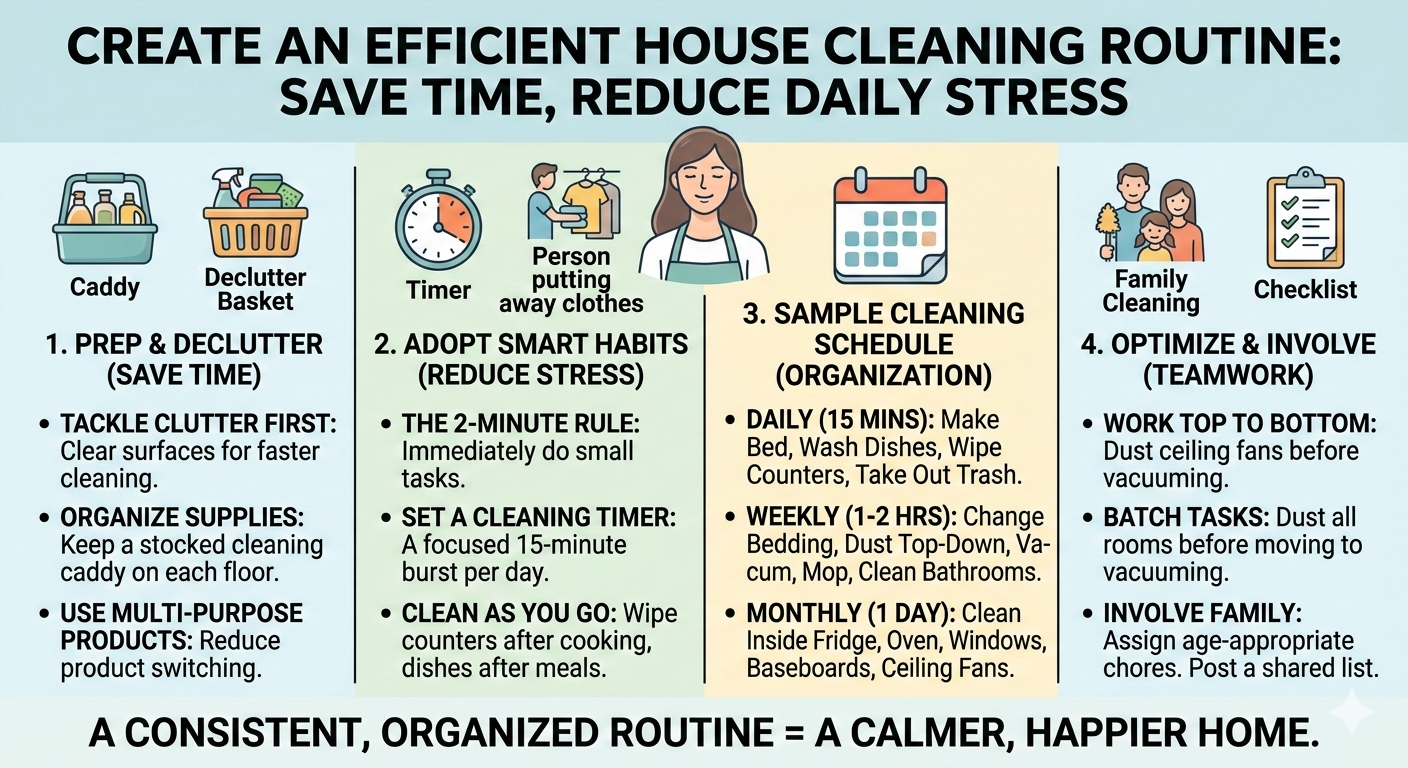
Keeping a home clean does not have to feel overwhelming or exhausting. Many people experience stress because cleaning tasks pile up and become difficult to manage. The key to maintaining a tidy and comfortable living environment is not spending entire days cleaning, but creating a structured and efficient routine says Rollingwood Management, a leading property management Sunset Valley TX company. With the right strategy, you can save time, reduce daily stress, and keep your home consistently organized without feeling burdened.
An effective house cleaning routine focuses on consistency, prioritization, and realistic scheduling. Instead of waiting for messes to accumulate, small daily efforts combined with planned weekly and monthly tasks make cleaning manageable and far less stressful.
Start with a Realistic Cleaning Plan
The first step in creating an efficient cleaning routine is developing a plan that fits your lifestyle. Every household is different, so your schedule should reflect the number of occupants, work commitments, and overall activity level in your home.
Begin by listing all cleaning tasks and dividing them into categories such as daily, weekly, and monthly responsibilities. Daily tasks typically include making beds, wiping kitchen counters, washing dishes, and doing quick clutter checks. Weekly tasks may include vacuuming, mopping, bathroom cleaning, and dusting. Monthly tasks often involve deep cleaning appliances, washing windows, and organizing storage areas.
A structured plan eliminates guesswork and prevents tasks from being forgotten or postponed.
Focus on High-Traffic Areas First
Certain areas of the home accumulate dirt and clutter more quickly than others. Kitchens, bathrooms, entryways, and living rooms typically require more frequent attention. Prioritizing these spaces ensures that the home feels clean even if every area is not addressed daily.
By maintaining high-traffic areas consistently, you reduce the need for intensive deep cleaning sessions. Wiping down surfaces, sweeping floors, and disinfecting bathroom fixtures regularly keeps grime from building up and saves significant time in the long run.
Use the “Clean as You Go” Method
One of the most effective ways to reduce daily cleaning stress is adopting the “clean as you go” approach. Instead of allowing messes to accumulate, address small tasks immediately. Wash dishes after meals, wipe bathroom counters after use, and return items to their proper places right away.
This habit prevents clutter from spreading and keeps tasks from becoming overwhelming. Small actions performed consistently require far less effort than tackling large messes all at once.
Set Time Limits to Stay Efficient
Cleaning does not need to consume your entire day. Setting time limits for specific tasks increases focus and efficiency. For example, dedicate 15 minutes each morning to quick tidying or 20 minutes in the evening to reset the kitchen and living room.
Using a timer can create a sense of urgency and prevent distractions. Short, focused cleaning sessions are often more productive than unstructured, extended efforts.
Declutter to Reduce Cleaning Time
Clutter significantly increases cleaning time and mental stress. The more items you have, the more surfaces require dusting, organizing, and rearranging. Regular decluttering simplifies your routine and creates a calmer environment.
Evaluate belongings periodically and remove items that are no longer useful. Organize storage spaces so frequently used items are easily accessible. A minimalist approach to home organization makes cleaning faster and more manageable.
Keep Cleaning Supplies Accessible
Efficiency improves when cleaning tools are readily available. Store basic supplies such as microfiber cloths, disinfectant wipes, and all-purpose cleaners in convenient locations. Some homeowners keep small cleaning caddies on each floor to avoid wasting time searching for products.
Having the right tools within reach encourages quick touch-ups and reduces procrastination. When supplies are easily accessible, it becomes easier to maintain consistent habits.
Establish a Weekly Reset Day
Choosing one day each week for a more thorough cleaning session helps maintain overall order. This “reset day” can include vacuuming all floors, changing bed linens, scrubbing bathrooms, and emptying trash bins.
By assigning larger tasks to a specific day, you prevent them from interfering with daily routines. Weekly resets restore cleanliness and prepare your home for the upcoming week.
Involve the Entire Household
Cleaning should not fall on one person alone, especially in shared households. Assign age-appropriate tasks to family members and create a simple chore schedule. When responsibilities are distributed evenly, the workload becomes lighter and more manageable.
Encouraging participation also builds accountability and ensures that everyone contributes to maintaining a comfortable living environment.
Maintain Consistency Over Perfection
An efficient cleaning routine prioritizes consistency rather than perfection. Homes are lived in spaces, and minor imperfections are normal. The goal is to maintain a healthy and organized environment without striving for unrealistic standards.
By focusing on steady maintenance instead of occasional deep cleaning marathons, you create a balanced routine that reduces stress and preserves your time.
Conclusion
Creating an efficient house cleaning routine is about planning, consistency, and simplicity. Breaking tasks into manageable categories, focusing on high-traffic areas, and adopting small daily habits can dramatically reduce cleaning time and stress. When cleaning becomes part of a structured routine rather than an overwhelming chore, maintaining a tidy home feels achievable and sustainable.
With a thoughtful approach and realistic expectations, you can enjoy a cleaner, more organized living space while saving time and minimizing daily stress.
 prime star