

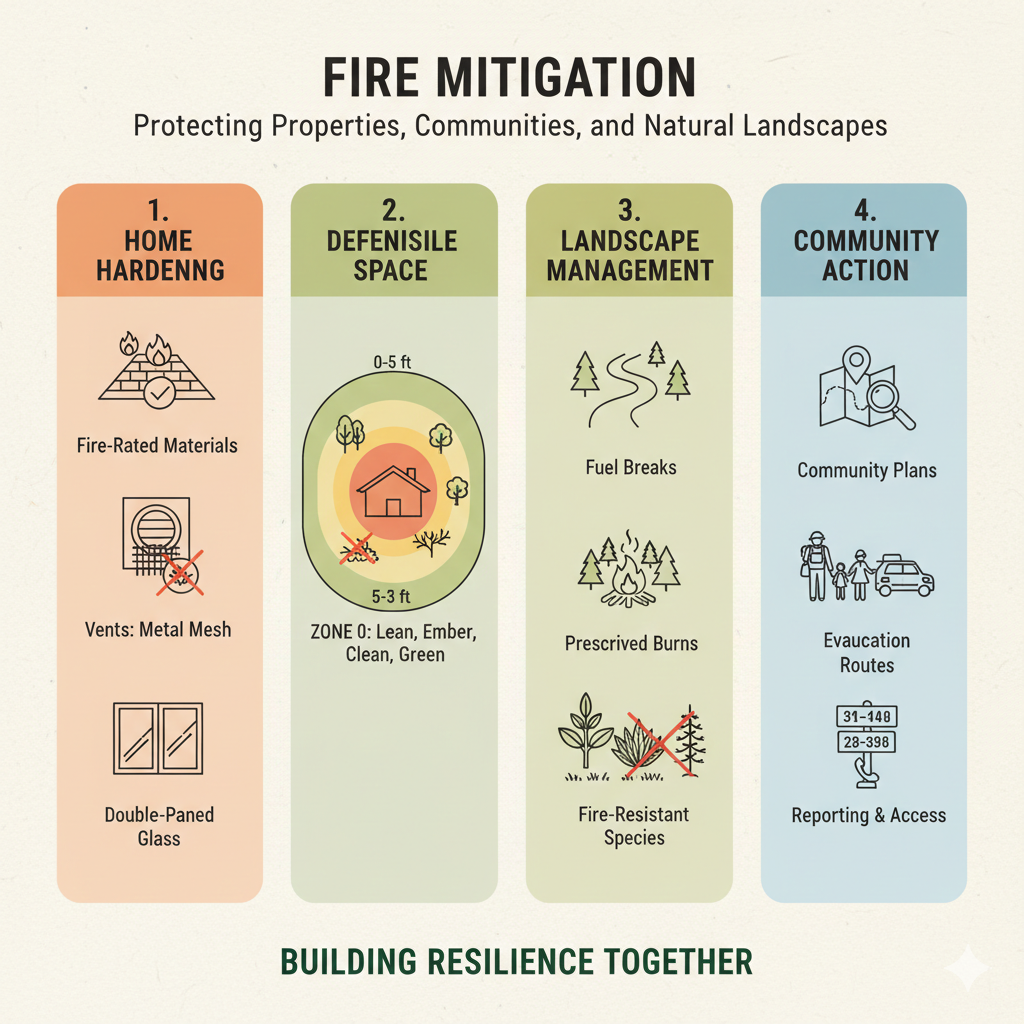
Fire mitigation is a proactive approach to reducing the risk and severity of wildfires and structural fires through strategic planning, vegetation management, and property improvements. As fire seasons grow longer and more intense, effective fire mitigation has become essential for homeowners, businesses, and land managers. By addressing potential fuel sources and improving site resilience, fire mitigation helps protect lives, infrastructure, and the surrounding environment while minimizing the economic and ecological impacts of fire events.
Understanding Fire Mitigation and Its Purpose
Fire mitigation refers to a range of practices designed to reduce fire ignition potential and slow fire spread. Unlike emergency firefighting, which responds after a fire begins, fire mitigation focuses on prevention and preparedness. These measures are carefully planned to create defensible spaces, reduce combustible materials, and enhance a property’s ability to withstand fire exposure. Effective fire mitigation integrates land management, construction considerations, and ongoing maintenance to create safer conditions in fire-prone areas.
Common Fire Risks in Residential and Commercial Properties
Fire risks vary depending on location, climate, and land use, but several factors commonly increase vulnerability. Dense vegetation, dry brush, dead trees, and accumulated debris provide fuel that allows fires to spread rapidly. Structures built with flammable materials, poor clearance around buildings, and inadequate access for emergency vehicles further elevate risk. In commercial and multi-use properties, equipment operation, electrical systems, and human activity can also contribute to fire hazards. Fire mitigation addresses these risks through targeted interventions that reduce exposure and improve safety.
Key Fire Mitigation Strategies
Fire mitigation strategies are tailored to the specific characteristics of a property or landscape. Vegetation management is a cornerstone of mitigation, involving the removal of dead or overgrown plant material, thinning of trees, and pruning of lower branches to prevent ladder fuels. Creating defensible space around structures reduces the likelihood of flames reaching buildings. Fuel breaks, access road improvements, and fire-resistant landscaping further enhance protection. These strategies work together to limit fire intensity and provide safer conditions for firefighting efforts.
Fire Mitigation in Wildland and Rural Areas
Wildland and rural properties face unique fire challenges due to expansive vegetation and limited access. Fire mitigation in these areas often includes large-scale vegetation thinning, controlled clearing, and strategic land management to reduce continuous fuel sources. Techniques such as forestry mulching and selective clearing are commonly used to manage undergrowth while preserving soil stability and ecosystem health. These efforts help slow fire spread and protect nearby communities and infrastructure.
Structural Fire Mitigation and Building Protection
Protecting structures is a critical component of fire mitigation. This includes maintaining clear zones around buildings, using fire-resistant materials for roofs and siding, sealing vents and openings, and managing combustible items near structures. Regular inspections of electrical systems and equipment reduce ignition risks. Fire mitigation measures enhance a building’s ability to withstand radiant heat, embers, and direct flame contact, reducing the likelihood of structural loss during fire events.
Environmental and Economic Benefits of Fire Mitigation
Fire mitigation offers significant environmental benefits by reducing the likelihood of catastrophic fires that destroy habitats and degrade soil quality. Controlled vegetation management supports healthier ecosystems and promotes sustainable land use. Economically, fire mitigation reduces potential losses associated with property damage, insurance claims, and business interruptions. Investing in mitigation is often far more cost-effective than recovering from a major fire event.
Fire Mitigation for Communities and Infrastructure
Communities in fire-prone regions benefit greatly from coordinated fire mitigation efforts. Shared strategies such as community fuel reduction programs, improved evacuation routes, and public education initiatives strengthen overall resilience. Infrastructure protection, including utilities and transportation corridors, is enhanced through vegetation management and access improvements. These collective efforts reduce risk at a broader scale and support safer emergency response operations.
The Importance of Ongoing Fire Mitigation Maintenance
Fire mitigation is not a one-time effort but an ongoing process that requires regular maintenance and reassessment. Vegetation regrowth, weather conditions, and land use changes can alter fire risk over time. Routine inspections, seasonal clearing, and updates to mitigation plans ensure continued effectiveness. Ongoing maintenance helps property owners stay prepared and responsive to evolving fire threats.
Choosing a Professional Fire Mitigation Service
Professional fire mitigation services bring expertise, equipment, and strategic planning to risk reduction efforts. Qualified providers assess property conditions, identify hazards, and implement tailored solutions that meet local regulations and environmental standards. Working with experienced professionals ensures that fire mitigation measures are effective, compliant, and sustainable over the long term.
Conclusion
Fire mitigation is a vital investment in safety, resilience, and environmental stewardship. By reducing fire risk through proactive planning, vegetation management, and structural improvements, property owners and communities can protect lives, assets, and natural resources. Whether applied to residential properties, commercial developments, or large rural landscapes, effective fire mitigation strengthens preparedness and minimizes the devastating impacts of fire. Committing to ongoing mitigation efforts is a responsible and forward-thinking approach to living and working in fire-prone environments.
 Qasim Bhai