

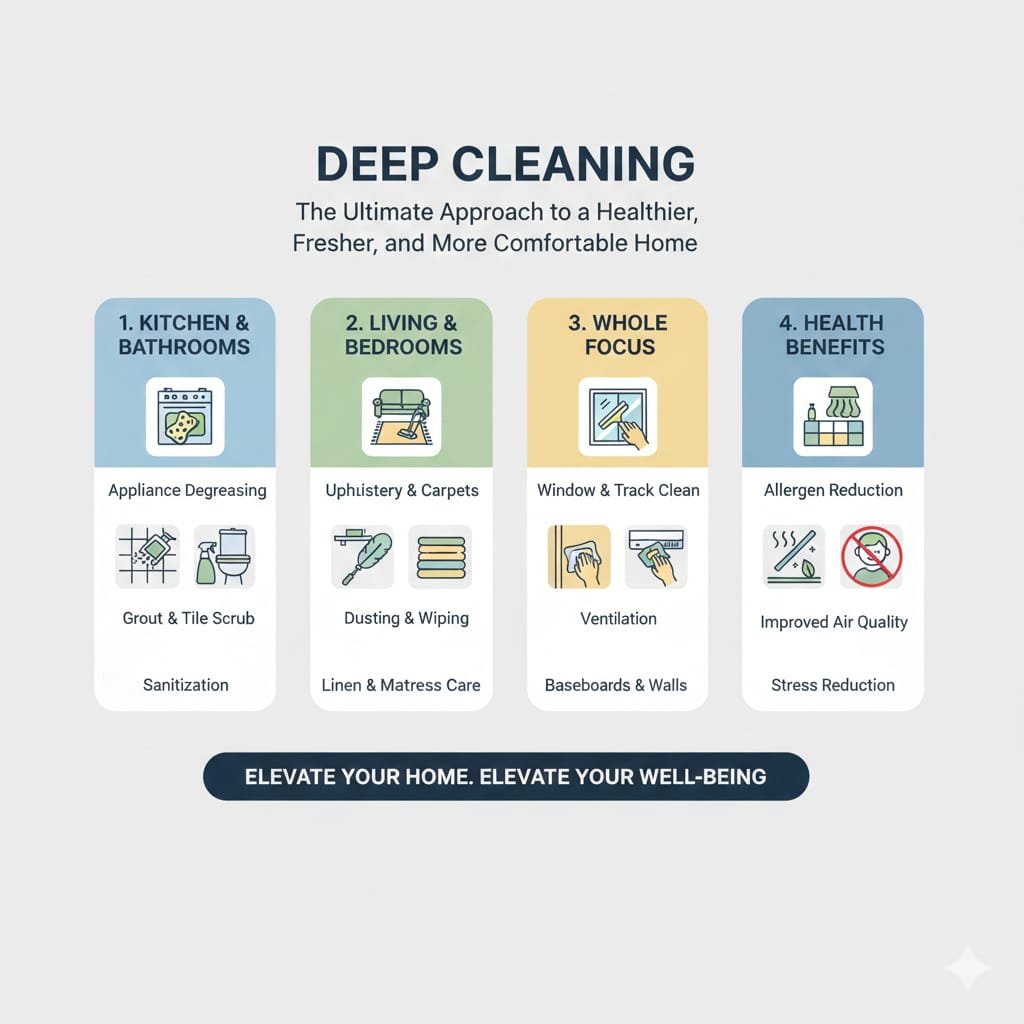
A clean home goes beyond what meets the eye. While regular tidying and surface cleaning help maintain appearance, they often leave hidden dirt, bacteria, and buildup untouched. This is where deep cleaning becomes essential says RentEasy Norfolk team. It is a thorough, detailed process that targets neglected areas, removes stubborn grime, and restores freshness throughout the home. More than a routine task, it is a powerful way to protect health, extend the life of household surfaces, and create a truly comfortable living environment.
This article explores what deep cleaning really means, why it matters, how it differs from standard cleaning, and how it contributes to long-term home care.
Understanding the Meaning of Thorough Home Cleaning
Deep cleaning is a comprehensive method of cleaning that focuses on areas often missed during routine maintenance. Instead of only wiping visible surfaces, it involves scrubbing, sanitizing, and detailing spaces that accumulate dirt over time. These include corners, baseboards, behind furniture, inside appliances, and hard-to-reach areas.
This approach addresses not only cleanliness but also hygiene. By removing hidden contaminants, it creates a healthier indoor environment and restores the original condition of many surfaces.
Why Regular Cleaning Is Not Always Enough
Routine cleaning is important, but it is designed for maintenance rather than restoration. Over time, grease, soap residue, dust, and bacteria build up in areas that are rarely touched during daily or weekly cleaning. Floors may look clean but still trap allergens, while kitchens and bathrooms can harbor germs beneath the surface.
Without periodic intensive cleaning, these hidden issues continue to grow. Deep cleaning resets the environment, eliminating buildup and preventing long-term damage that can be costly or difficult to reverse.
Health Benefits of a Thoroughly Cleaned Home
One of the strongest reasons to invest time in deep cleaning is health. Dust mites, mold spores, and bacteria thrive in neglected spaces. These contaminants can trigger allergies, worsen respiratory conditions, and contribute to frequent illness.
By thoroughly sanitizing surfaces and removing embedded dirt, deep cleaning significantly improves indoor air quality. This is especially beneficial for households with children, pets, or individuals sensitive to allergens. A cleaner environment supports better breathing, improved sleep, and overall well-being.
Areas That Benefit Most from Intensive Cleaning
Every part of the home gains from deep cleaning, but some areas require extra attention. Kitchens benefit from degreasing appliances, cleaning inside cabinets, and sanitizing food preparation areas. Bathrooms need thorough disinfection of tiles, grout, fixtures, and drains to prevent mold and bacteria growth.
Living areas often accumulate dust in upholstery, curtains, and carpets, while bedrooms require attention to mattresses, under-bed spaces, and storage areas. These tasks go far beyond surface-level cleaning and make a noticeable difference in comfort and freshness.
Deep Cleaning vs. Routine Maintenance
Understanding the difference between these two approaches helps set realistic expectations. Routine maintenance focuses on keeping the home presentable through frequent, light tasks. Deep cleaning, on the other hand, is less frequent but far more detailed.
While routine cleaning maintains order, deep cleaning restores cleanliness. Both are essential, and when combined, they create a balanced system that keeps the home consistently healthy and inviting.
How Often Should Deep Cleaning Be Done
The frequency of deep cleaning depends on lifestyle, household size, and daily activity levels. Homes with pets, children, or high foot traffic may benefit from more frequent sessions. For most households, scheduling deep cleaning seasonally or a few times a year is sufficient.
Regular maintenance between sessions ensures that the results last longer and that the home never returns to an overwhelming state.
The Role of Decluttering in Effective Cleaning
Clutter can make deep cleaning difficult and less effective. Excess items create obstacles and trap dust, making it harder to reach surfaces. Decluttering before deep cleaning allows for better access and more thorough results.
Reducing unnecessary items also makes future maintenance easier. When everything has a designated place, cleaning becomes faster and more efficient.
Tools and Techniques for Better Results
Effective deep cleaning requires the right tools and methods. Microfiber cloths, scrub brushes, vacuum cleaners with strong filtration, and appropriate cleaning solutions all play an important role. Choosing products suited to specific surfaces prevents damage while ensuring thorough sanitation.
Eco-friendly options are increasingly popular, offering powerful cleaning without harsh chemicals. These alternatives protect indoor air quality while still delivering excellent results.
Time and Effort Involved
Deep cleaning requires more time and effort than routine tasks, which is why it is often postponed. However, breaking the process into manageable sections makes it more achievable. Focusing on one room at a time or spreading tasks over several days reduces fatigue.
Although demanding, the results are immediate and long-lasting, making the effort worthwhile.
Professional vs. DIY Deep Cleaning
Some homeowners choose to handle deep cleaning themselves, while others prefer professional assistance. Professionals bring experience, specialized equipment, and efficiency that can significantly reduce the time required.
Whether done personally or with help, the goal remains the same: achieving a level of cleanliness that routine methods cannot provide. Even those who clean regularly often notice a dramatic improvement after a professional deep cleaning session.
Impact on Home Longevity and Appearance
Dirt and grime do more than affect appearance; they slowly degrade surfaces. Floors wear faster, appliances lose efficiency, and fixtures become stained. Deep cleaning protects these investments by removing harmful buildup before it causes permanent damage.
A well-maintained home also retains its visual appeal, making it more enjoyable to live in and easier to maintain over time.
Stress Reduction and Mental Clarity
A deeply cleaned home has a powerful psychological effect. Clutter-free, sanitized spaces promote calmness and focus. Many people experience reduced stress and improved mood after a deep cleaning session.
This sense of renewal often motivates better daily habits, reinforcing a cycle of cleanliness and organization.
Preparing for Special Occasions or Transitions
Deep cleaning is particularly valuable before major events or life changes. Whether preparing for guests, seasonal transitions, or personal milestones, it ensures the home feels refreshed and welcoming.
It is also beneficial during lifestyle changes, such as adopting new routines or reorganizing living spaces, as it provides a clean foundation for new beginnings.
Building a Long-Term Cleaning Strategy
Rather than viewing deep cleaning as a one-time task, it should be part of a broader home care strategy. Combining routine maintenance with periodic intensive cleaning creates sustainable cleanliness.
By planning ahead and setting realistic schedules, homeowners can avoid overwhelming workloads and maintain consistent results throughout the year.
Environmental Responsibility and Smart Choices
Modern deep cleaning practices increasingly focus on sustainability. Using reusable tools, reducing water waste, and choosing non-toxic products contribute to a healthier home and environment.
These choices protect not only household members but also the broader ecosystem, aligning cleanliness with responsible living.
Final Thoughts
A truly clean home requires more than surface-level effort. Deep cleaning addresses the hidden layers of dirt and buildup that affect health, comfort, and longevity. It restores freshness, improves air quality, and enhances overall quality of life.
By incorporating deep cleaning into regular home care routines, homeowners create a space that supports well-being, reduces stress, and feels genuinely renewed. The results go beyond cleanliness, shaping a home that is healthier, more inviting, and easier to maintain for the long term.
 Qasim Bhai