

Mid-market growth often looks manageable until complexity quietly compounds. Teams expand, revenue increases, and operational volume rises, yet underlying systems struggle to keep pace. What once felt efficient becomes fragmented, slowing visibility and decision-making.
At this stage, technology choices begin to influence long-term competitiveness. Disconnected tools introduce friction between finance, operations, and leadership, making it harder to respond quickly to market shifts or internal demands.
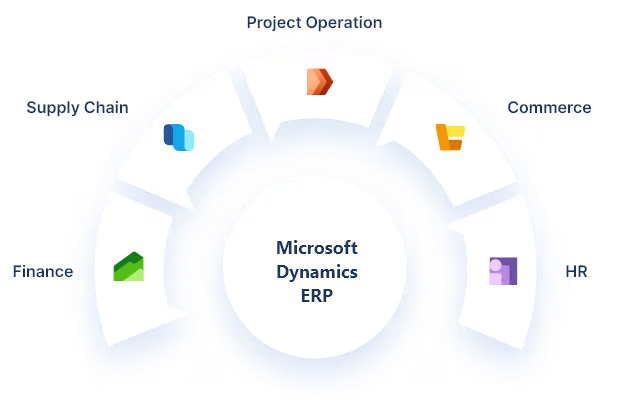
For organizations navigating this transition, Microsoft Dynamics 365 ERP offers a structured yet flexible foundation that supports scale while keeping operational discipline intact.
Understanding the Mid-Market Reality
Growth rarely arrives in a clean, predictable pattern. Expansion introduces new products, regions, and regulatory obligations, all of which increase operational complexity. Without the right systems in place, teams compensate with manual processes that become increasingly fragile over time.
Growth Brings Complexity, Not Just Volume
As transaction volumes rise, finance teams face longer close cycles and heavier reconciliation workloads. Operational teams work with inconsistent data, limiting their ability to forecast or optimize effectively. These challenges often appear gradually, making them easy to underestimate until they start impacting performance.
ERP Expectations Are Changing
ERP platforms are no longer defined by rigidity or long deployment cycles. Modern ERP solutions focus on modular adoption, cloud delivery, and faster outcomes. This shift aligns better with mid-market organizations that need immediate value without committing to excessive upfront complexity.
Designed to Scale Alongside the Business
Sustainable growth depends on systems that evolve with the organization. ERP must accommodate current needs while remaining flexible enough to support future expansion. A scalable design allows businesses to grow without repeatedly reengineering core processes.
Start Small, Expand with Confidence
Mid-market organizations benefit from adopting ERP in phases. Core financial management typically serves as the foundation, with advanced operational capabilities added as complexity increases. This approach reduces risk and ensures each expansion delivers tangible business value.
Cloud Architecture That Removes Friction
Cloud-based ERP platforms eliminate infrastructure management and reduce reliance on internal IT teams. Continuous updates keep systems current without disruptive upgrades, allowing organizations to focus on growth rather than system maintenance.
Financial Control Without Operational Drag
Financial discipline becomes increasingly important as organizations scale. Leaders require reliable insights to guide strategy, while teams need systems that support efficiency rather than slow it down.
Real-Time Financial Visibility
Unified financial data enables leadership teams to monitor performance across business units and regions in real time. Faster access to accurate insights supports proactive decision-making and more effective financial planning.
Governance That Supports Speed
Automated workflows and role-based controls help enforce financial policies without introducing unnecessary bottlenecks. This balance ensures accountability while maintaining operational momentum.
Operational Alignment as Scale Increases
As operations expand, the cost of misalignment grows. Procurement, inventory, and production decisions directly impact financial performance, making coordination between functions essential.
Managing Multi-Entity Complexity
Expansion often brings multiple legal entities, currencies, and regulatory environments. Solutions like Dynamics 365 Finance & Operations are designed to manage this complexity within a unified framework, preserving consistency while supporting local requirements.
Connecting Operations to Financial Outcomes
ERP enables tighter integration between operational processes and financial reporting. This connection improves forecasting accuracy, cost control, and overall operational efficiency, particularly in fast-growing environments.
Faster Time to Value for Lean Teams
Mid-market organizations typically operate with lean teams and limited tolerance for prolonged implementations. ERP adoption must deliver value early to justify investment and maintain internal support.
Phased Implementation Delivers Early Wins
A phased rollout prioritizes high-impact areas first, allowing teams to see measurable improvements quickly. Early success builds confidence and encourages broader adoption across the organization.
Familiar Tools Encourage Adoption
Systems that align with commonly used productivity tools reduce training requirements and improve user adoption. Familiarity accelerates onboarding and helps teams realize value faster.
Security, Compliance, and Long-Term Readiness
Growth increases exposure to regulatory requirements and cybersecurity risks. ERP platforms must provide a secure foundation that supports compliance without constant manual oversight.
Built-In Risk Management
Modern ERP systems embed security controls, audit capabilities, and data governance into core processes. This approach simplifies compliance and supports future expansion into regulated markets.
Preparing for Automation and AI
ERP increasingly acts as the backbone for automation and advanced analytics. Selecting a platform designed to evolve ensures businesses can adopt new technologies without replacing foundational systems.
A Strategic Investment for Sustainable Growth
ERP adoption in the mid-market extends beyond operational efficiency. It shapes how organizations manage complexity, respond to change, and plan for the future.
Microsoft ERP aligns with mid-market needs by combining enterprise-grade capability with practical flexibility. It supports disciplined growth while keeping complexity manageable, enabling businesses to scale with confidence and clarity.
 hamza seo
  Shaban Ch