
Multilingual product content presents a design problem as well as a language problem. A short English feature label may become a much longer phrase in German or French, while Japanese or Arabic text can introduce different spacing, alignment and reading-direction requirements.
These changes are especially visible in product images, mobile marketplace listings and illustrated manuals. Small specifications can become difficult to read, headings may compete with product photography, and translated captions can lose their visual connection with the diagrams they explain.
A typography-focused workflow helps teams review these details before publication. An ecommerce localization tool that combines translation with online visual editing allows reviewers to examine wording, line breaks, text placement and hierarchy within the actual design rather than reviewing isolated text in a spreadsheet.
Why Multilingual Launches Create So Much Repeated Work
The translation itself is only one part of ecommerce localization. Most launches include several types of visual content:
- Product images with embedded feature descriptions
- Marketing posters and campaign graphics
- Marketplace banners
- PDF manuals and product guides
- Regional promotional materials
- Supporting documents for customers and distributors
These files often pass through separate workflows. Text may be copied from an image into a spreadsheet, sent to a translator and returned to a designer. PDF manuals may be handled by another team. Regional reviewers may send corrections through email or chat.
The process becomes difficult to track because each asset creates its own chain of tasks. When the source content changes, teams may have to repeat the same work across every language and file type.
A well-designed multilingual product launch workflow connects these activities and gives everyone a shared process to follow.
Step 1: Prepare the Source Content
Localization problems often begin before translation starts. Duplicate files, inconsistent product names and unfinished source copy create confusion later.
Teams should begin by collecting the final source assets for each product. This may include the main listing images, promotional graphics, manual and market-specific campaign materials.
The source review should confirm:
- Which file is the current version
- Whether product names are consistent
- Whether measurements and specifications are correct
- Which text appears across multiple assets
- Whether any content still requires legal or technical approval
- Which elements must remain unchanged in every market
A simple asset list can prevent an outdated image or draft manual from entering the translation workflow. It also gives project owners a clear view of the materials required for launch.
Step 2: Audit Typography Before Translation
Before translating an asset, identify the areas where the current design has little room for text expansion. Product specifications, ingredient notes, dimensions, button labels and promotional qualifiers often use smaller type or tightly constrained text boxes.
The audit should record:
- The smallest text size used in the design
- Text placed over photographs or textured backgrounds
- Headings with limited horizontal space
- Labels that depend on a specific line break
- Text that must remain readable on a mobile screen
- Elements whose position establishes the visual hierarchy
Designers can then identify which text boxes may need more space, which backgrounds require stronger contrast and which layouts need an alternative mobile version. This preparation reduces the risk of forcing a longer translation into a space designed around short English copy.
Step 3: Connect Translation With Visual Editing
Visual materials require more than translated text. The words must fit naturally into the available space and remain readable within the design.
Longer translations may affect line breaks, font size and alignment. Text placed over a product photo may cover an important detail. A translated heading may need to be repositioned to preserve the original visual hierarchy.
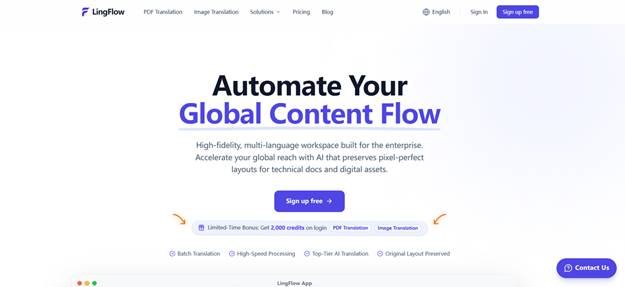
LingFlow is designed for this part of the process. The platform provides a workflow in which ecommerce and international operations teams can upload product images, marketing posters and PDF manuals, generate translated content, and then review or edit the visual assets online.
Bringing translation and image editing into the same review environment allows designers and language reviewers to examine the asset together. During LingFlow’s online editing stage, they can check the translated wording, adjust its placement and refine the visual presentation before export.
Step 4: Protect the Relationship Between Text and Diagrams
Illustrated manuals depend on more than accurate sentences. Figure numbers, captions, callout labels and instructions must remain connected so readers can tell which text explains each image.
Text expansion can disturb this relationship. A longer caption may move onto another page, a translated label may overlap a diagram, or a paragraph may become separated from the warning symbol or product part it references.
LingFlow supports PDF manuals alongside product graphics. An AI document translation workflow can produce an initial multilingual version for review while preserving the document as part of the wider localization process.
Reviewers should compare every caption with its corresponding image, confirm that numbered instructions remain in sequence and inspect whether page breaks separate diagrams from essential explanations. Technical and safety-related content should also receive human language and product review before publication.
Step 5: Define the Review Sequence
A file marked “translated” may still require several checks before publication. Clear review stages prevent teams from assuming that someone else has approved the final asset.
A practical sequence may include:
- Translation review: Check meaning, grammar and market-appropriate language.
- Terminology review: Confirm product names, feature labels and recurring phrases.
- Visual review: Inspect spacing, line breaks, alignment and readability.
- Product review: Verify measurements, specifications and instructions.
- Market approval: Ask a regional owner to confirm that the material is suitable for local customers.
- Final release check: Confirm the correct language and version before publication.
Each stage should have a named owner. When responsibilities are vague, corrections tend to circulate between teams without a final decision.
Step 6: Keep Approved Language Reusable
Product launches often share recurring content. Shipping statements, product features, care instructions and brand terminology may appear across multiple assets.
Teams should keep a record of approved terms and phrases for each language. This reference can help translators and reviewers maintain brand consistency and reduce repeated discussions.
The same principle applies to corrections. If a regional reviewer changes a product term in one image, the team should check whether that term also appears in the manual, campaign poster or another product listing.
A reusable language reference becomes more valuable with every launch because it preserves decisions that would otherwise remain scattered across emails and individual files.
Step 7: Run a Small Pilot Before Scaling
Before processing an entire catalogue, teams can test the multilingual product launch workflow with one product and one target market.
The pilot should include several asset types so the team can evaluate the complete process. A useful test package might contain five product images, one promotional graphic and one PDF guide.
During the pilot, record:
- How long each stage takes
- Where manual intervention is required
- Which layout problems appear most often
- How many review rounds are needed
- Whether terminology remains consistent
- Where reviewers become unsure about ownership
These observations can be used to improve the workflow before the next batch begins.
Step 8: Review the Final Design at Its Real Display Size
A graphic that looks clear on a desktop monitor may become difficult to read inside a mobile product listing. Final review should reproduce the size and context in which customers will see the content.
Check whether:
- Small specifications remain legible without zooming
- Translated headings preserve a clear visual hierarchy
- Longer text avoids covering important product details
- Line breaks feel natural in the target language
- Text and background colours provide sufficient contrast
- Captions remain visually connected to the correct diagrams
- Mobile crops retain essential text and imagery
- Logos, disclaimers and required legal copy remain visible
These checks give designers a practical quality standard for multilingual assets and help regional reviewers identify presentation problems before publication.
Build a Process That Improves With Each Market
International expansion creates more content, more reviewers and more opportunities for inconsistency. A repeatable multilingual product launch workflow keeps that complexity manageable.
Preparing clean source assets, grouping related materials, connecting translation with visual editing and defining approval stages can reduce unnecessary handoffs. Human reviewers remain central to language quality, product accuracy and local relevance.
LingFlow supports this workflow by bringing product images, promotional materials and PDF manuals into one AI-assisted localization environment. As teams reuse approved terminology and refine their review process, each new market launch can become more predictable and easier to coordinate.
 Shaban Ch