

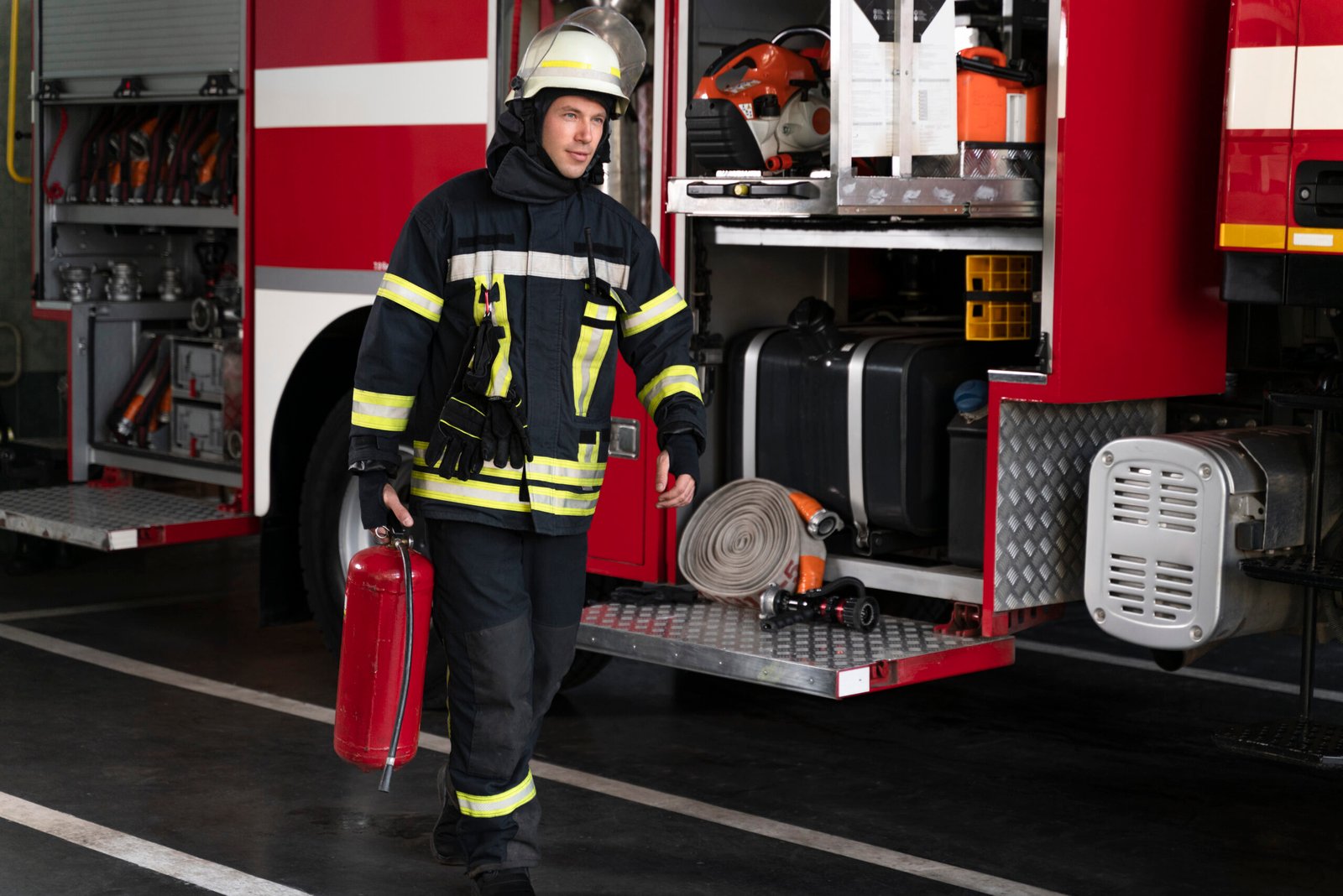
If you own a property that other people live or work in, fire safety isn’t optional — and it isn’t something you can delegate. The legal responsibility sits with you, and the consequences of getting it wrong range from significant fines to criminal prosecution. More importantly, the human consequences of a preventable fire in a property you’re responsible for are serious in a way that no insurance payout addresses.
This is a practical guide to what’s actually required, what’s commonly missed, and where the gaps tend to appear.
The Legal Framework
For commercial premises and houses in multiple occupation (HMOs), the primary piece of legislation is the Regulatory Reform (Fire Safety) Order 2005. Under this, the “responsible person” — usually the owner, employer, or person in control of the premises — is required to carry out a fire risk assessment, implement the measures it identifies, maintain fire safety equipment, and keep records of everything.
For residential landlords letting to a single household, the requirements are less extensive but still real. At a minimum, you’re required to install working smoke alarms on every floor and carbon monoxide alarms in rooms with solid fuel appliances, and to ensure they’re in working order at the start of each tenancy. Furniture and furnishings must meet fire resistance standards. If you’re letting an HMO — any property shared by three or more people from different households — the requirements increase substantially and align more closely with commercial obligations.
Ignorance of the requirements is not a defence. If a fire occurs in a property you’re responsible for and the investigation finds that basic legal requirements weren’t met, you’re exposed. That’s not a theoretical risk — fire safety prosecutions of landlords and business owners happen regularly.
Fire Risk Assessments
The fire risk assessment is the foundation of everything else. It identifies the specific hazards in a given building, evaluates who is at risk and how, and sets out the measures needed to reduce that risk to an acceptable level.
For any commercial premises or HMO, the assessment must be written down and reviewed regularly — at least annually, and whenever there are significant changes to the building, its use, or the people in it. A new layout, a change in occupancy, building work, new equipment — any of these can alter the fire risk profile enough to require a fresh look.
The assessment needs to be carried out by a competent person. For straightforward premises, a responsible and well-informed owner can do this themselves using official guidance. For anything more complex — larger buildings, premises with vulnerable occupants, or buildings with unusual layouts or fire risks — a professional assessment is the right call. The cost of getting it done properly is modest compared to the cost of getting it wrong.
Alarm Systems
For commercial premises and HMOs, a domestic smoke alarm is not sufficient. You need a fire detection and alarm system appropriate to the size, layout, and use of the building — and it needs to be installed, commissioned, and maintained by a competent engineer.
The type of system required depends on the risk assessment. Larger or more complex premises typically need addressable systems that can identify exactly which detector has been triggered. For properties where wiring is difficult — older buildings, listed properties, premises where retrofitting cables would be disruptive or cost-prohibitive — a wireless fire alarm system is often the most practical solution. Modern wireless systems are fully compliant with British Standards, offer the same detection and notification capabilities as wired equivalents, and can be installed with minimal disruption to the building fabric. They’re also easier to expand or reconfigure if the building use changes.
Regardless of the type of system installed, it needs to be tested weekly by a competent person on site — typically a simple activation of a manual call point — and serviced by a qualified engineer at least every six months. Testing and servicing records must be kept in a fire log book. If you can’t produce those records when asked by a fire safety inspector, you have a problem.
Alarm maintenance isn’t just about compliance. A system that hasn’t been properly maintained may not function correctly in an actual emergency — detectors lose sensitivity, batteries fail, and faults that would be caught in a service go unnoticed until the system is needed and doesn’t perform.
Extinguishers
Every commercial premises needs appropriate fire extinguishers, correctly specified, correctly positioned, and properly maintained. The specification — meaning which types and how many — comes from the fire risk assessment and depends on the hazards present in the building.
An annual professional service is the legal minimum for extinguishers in commercial premises, with a basic visual check required monthly to confirm that each extinguisher is in its designated position, undamaged, and showing the correct pressure reading. Both types of check need to be recorded.
Fire extinguisher servicing is not simply a matter of confirming that the pressure gauge is in the green. A proper annual service includes a full inspection of the body and operating mechanism, a check of the discharge medium where applicable, replacement of any components that have degraded, and resealing and relabelling. Extended service intervals — typically every five years for most types — involve more extensive work including internal inspection and, for some types, a hydraulic pressure test. At the end of their service life, extinguishers need to be replaced rather than simply refilled.
Keeping extinguishers past their service life or in poor condition isn’t just a compliance issue. An extinguisher that fails to discharge properly in an emergency — because of a blocked nozzle, a degraded seal, or a weakened pressure vessel — is useless at exactly the moment it’s needed most.
Emergency Lighting and Exit Signage
In any premises where people other than the owner are present, emergency lighting and exit signage are legal requirements. Emergency lighting needs to activate automatically if the main power supply fails, and must illuminate escape routes sufficiently for occupants to find their way out safely.
Exit signs must be clearly visible from all points along an escape route, including around corners and at any point where the direction of travel isn’t obvious. The signs themselves need to be of the correct type — illuminated or photoluminescent depending on the application — and positioned at the right height.
Both emergency lighting and exit signage need to be tested regularly. Emergency lighting requires a monthly functional test and an annual full duration test. Any faults need to be rectified promptly — a failed light above a fire exit isn’t something to add to the maintenance list for next month.
Practical Steps for Getting Compliant
If you’re responsible for a premises and you’re not confident that everything is in order, the most useful starting point is a professional fire risk assessment. Everything else flows from that — it tells you what you need, which removes the guesswork from equipment specification and helps you prioritise.
From there, working with a single fire safety contractor for alarms, extinguishers, and associated equipment makes the compliance process considerably more manageable. Consolidated service records, a single point of contact, and an engineer who knows the building all reduce the administrative load and reduce the chance of something falling through the gap between different contractors.
Fire safety compliance for commercial premises and rental properties isn’t complicated once the right foundations are in place. The difficulty is usually getting started — either because the requirements feel overwhelming or because it’s easy to keep deferring something that doesn’t feel urgent until it is. The straightforward answer is that the time to deal with it is before anything goes wrong, not after.
 hamza seo
  Shaban Ch