

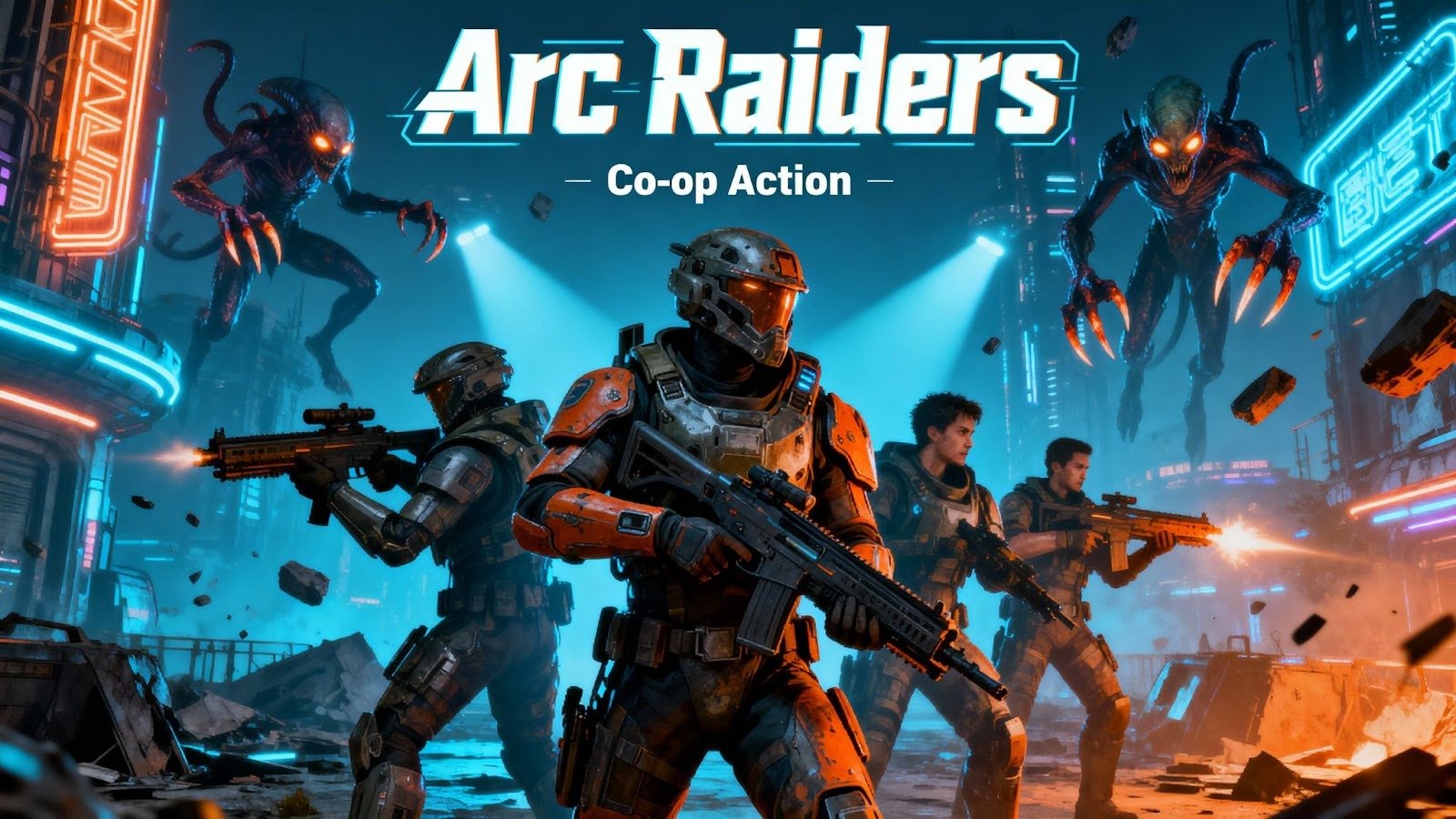
Look, I’ve died more times in ARC Raiders than I’d like to admit. Probably somewhere north of 200 deaths before things finally clicked. But that’s the thing about this game—it doesn’t hand you anything. You either figure out what works or you keep losing gear until you’re broke and frustrated.
The weird part? Once you know what you’re doing, the game almost feels easy. Not actually easy, but predictable. You start seeing patterns everywhere. Those terrifying ARC mechs become just another obstacle to route around. Other players stop catching you off guard. Extraction stops feeling like gambling and starts feeling earned.
So what changed? Let me break down the stuff that actually matters.
Those Mechs Aren’t Random (Once You Pay Attention)
Took me maybe 15 raids before I realized the ARC mechs follow routes. They’re not just wandering around randomly—they’ve got patrol paths, and once you learn them, everything changes.
I started doing what I call “observation runs” where I’d go in with minimal gear, just to watch. Where do the mechs go? How long do they stay in one spot? What makes them investigate vs. what they ignore completely? Spent maybe four or five raids just taking mental notes, and it paid off huge.
Here’s something specific: those mechs have a detection cone, not a detection circle. You can literally stand behind one at pretty close range and they won’t register you. Risky? Absolutely. But when you’re trying to get past a chokepoint and there’s a mech blocking the obvious route, sometimes you need that option.
The other thing—and this separates people who just survive from people who thrive—is learning to manipulate them. Toss a grenade one direction, the mech investigates, you slip past the other way. Or even better, use them to clear out other players. Lead a mech toward where you heard gunfire and let them do your dirty work. Players focused on each other usually don’t notice the mechanical death machine rolling up until it’s too late.
If you’re thinking about snagging an ARC Raiders Steam key to jump in, just know this: understanding mech behavior is probably the single biggest skill gap between new players and people who consistently extract with full bags.
Why Sprinting Gets You Killed (And What To Do Instead)
I used to sprint everywhere. First week playing, I figured speed was safety. Get in, grab loot, get out fast. Made sense in my head.
Turns out I was basically ringing a dinner bell for every hostile player within 200 meters. Footsteps in this game carry further than you think, and experienced players are listening for exactly that kind of mistake.
Now I move differently. Crouching through anything that looks even slightly dangerous. Yeah, it’s slower, but you know what’s really slow? Respawning and re-gearing after some camper heard me coming from three buildings away.
The real trick is using other people’s noise. When gunfire pops off somewhere, that’s when you move. Everyone’s focused on that fight, their ears are pointed that direction, and you’ve got maybe 30-45 seconds where you’re basically invisible if you’re smart about it.
There’s also this thing veterans do where they’ll sprint for exactly three seconds, then stop completely and listen. It baits out people who heard you and are repositioning. If someone’s chasing that sound, you’ll hear them. If not, you just saved yourself a ton of time crouch-walking through an empty area.
Pack Light, Leave Rich
My first “successful” raids, I’d come back with a full inventory of random junk. Guns I’d never use, attachments for weapons I didn’t own, materials I didn’t need yet. Felt productive at the time.
Then I started watching what high-level players brought in. One primary weapon, one sidearm, some meds, maybe a utility item. That’s it. Everything else was empty space for actual valuables.
The math is simple: every kilogram you’re carrying affects your movement speed and stamina. When you need to run—and you will need to run—being light means living. Being overloaded means you’re a loot piñata waiting to break.
I’ve also learned to be ruthless about what counts as “worth it.” Unless something sells for serious currency or I specifically need it for progression, it stays on the ground. Veterans aren’t greedy, they’re selective. That mindset alone probably doubled my profit per hour.
Weight management also affects combat performance more than people realize. Your aim sway increases when you’re loaded down, your ADS speed drops, even your jump height changes. Little stuff that adds up when bullets are flying.
Learn From People Better Than You
Honestly, one of the best moves I made was finding a cheap game key, jumping in, and immediately looking for veteran players to learn from. Watching streams, reading guides, joining Discord communities—all of it accelerated my learning curve massively.
You don’t need to figure everything out through trial and error. Other people have already made those mistakes. Learn from them instead of repeating them.
The ARC Raiders community is actually pretty helpful if you ask specific questions. “How do I deal with mechs?” gets generic answers. “What’s the best route through the industrial sector when the southern extraction is hot?” gets detailed, useful responses.
I also started recording my deaths and reviewing them. Sounds sweaty, but it’s incredibly educational. “Why did I die there?” becomes obvious when you watch it back. Usually it’s something preventable—a sound mistake, a positioning error, impatience.
Extraction Is Where Amateurs Die
Every single extraction point is a trap. Some are just better hidden than others.
New players see that extraction marker and make a beeline straight for it. Then they’re shocked when they get ambushed 20 meters away from safety. Meanwhile, veterans are doing math in their heads—how much time is left, which extraction points are probably hot right now, whether it’s worth waiting another few minutes for things to cool down.
I almost never use the nearest extraction anymore. Sure, it’s tempting when you’re nervous about your loot, but that’s exactly where people camp. The extra two minutes walking to a farther point saves me way more time than constantly dying and restarting.
Timing is huge too. There’s usually a rush around the 10-minute-left mark where everyone with medium loot decides to extract. If you can wait that out, the map empties significantly. Sometimes I’ll literally sit in a bush for five minutes just to let the extraction zones clear out. Boring? Yeah. Effective? Absolutely.
Approach angles matter more than anything else. If there’s an obvious path to extraction—like a road or a cleared area—go around it. Use the terrain nobody wants to cross. Climb that annoying hill, wade through that murky area, take the long way through the broken buildings. Inconvenience equals safety in this game.
Reading The Environment Like A Book
Veterans are constantly collecting information, even when nothing’s happening. An open door you didn’t open. Loot boxes already hit. Shell casings on the ground. All of it tells a story about who’s been here and how recently.
I’ve gotten to where I can almost sense when an area’s been cleared already vs. when I’m the first one there. It’s a feel thing, hard to explain, but it comes from just paying attention to details instead of tunnel-visioning on loot.
Sound is obviously huge. Distant gunfire tells you where players are concentrated. Footsteps tell you someone’s close. Mechanical sounds mean ARC activity. But it’s also what you DON’T hear. Dead silence in an area that should have ambient noise? That’s often a sign someone’s nearby, crouch-walking just like you.
When I play with teams now, the callouts are completely different than when I started. Instead of “someone over there,” it’s “contact northeast, approximately 80 meters, moving toward the warehouse, sounded like two sets of footsteps.” That precision comes from practice, but it also comes from understanding that information wins fights before they even start.
Knowing When To Walk Away
This was the hardest lesson for me personally. I wanted to win every fight. Pride thing, ego thing, whatever. If someone shot at me, I shot back. Period.
Now? I probably disengage from half the fights I could take. Sometimes more. Because here’s the thing: winning a fight costs resources. Ammo, meds, time, and noise that attracts more problems. Even if you win, you might be worse off than if you’d just disappeared.
The question I ask now is simple: “What do I gain vs. what do I risk?” If I’m already loaded with good loot and someone’s pushing me, why fight? I can extract now and profit, or I can fight, maybe win, maybe die, definitely spend resources, and attract attention. Easy math.
Veterans understand that the real competition in ARC Raiders isn’t other players—it’s yourself. Can you stay disciplined? Can you make the smart play instead of the emotional play? Can you ignore your ego when it tells you to take a fight you don’t need?
Running away isn’t losing. It’s profit protection.
Think Progression, Not Raids
Big mindset shift: I stopped measuring success by individual raids and started thinking about my overall account progression. That changed everything.
Dying with high-tier gear sets you back more than you realize. Not just the immediate loss, but the time and resources to replace it. Meanwhile, successfully extracting with moderate loot five times in a row actually moves your progression forward significantly.
This affects every decision in the game. Do I push that contested area for potentially better loot, or do I take the safer route with guaranteed moderate gains? Old me pushed every time. Current me runs the math and usually plays it safe.
Budget runs are also way more viable than I initially thought. Going in light, hitting specific targets, getting out fast—you can do this repeatedly with minimal risk and consistent profit. It’s not exciting, but it builds your stash reliably.
The flip side is knowing when to invest. Sometimes you need to gear up properly because the opportunity demands it. Limited-time events, specific high-value targets, situations where the potential reward justifies the risk. Veterans know the difference.
Putting It All Together
The skill gap in ARC Raiders isn’t mechanical. You don’t need godlike aim or lightning reflexes. It’s decision-making, pattern recognition, and discipline under pressure.
Move quietly until you have a reason not to. Learn the mech patterns and use them to your advantage. Pack efficiently with space for profit. Treat extraction like the danger zone it is. Read the environment constantly. Walk away from bad fights. Think long-term over short-term gains. Learn from better players.
 Shaban Ch