

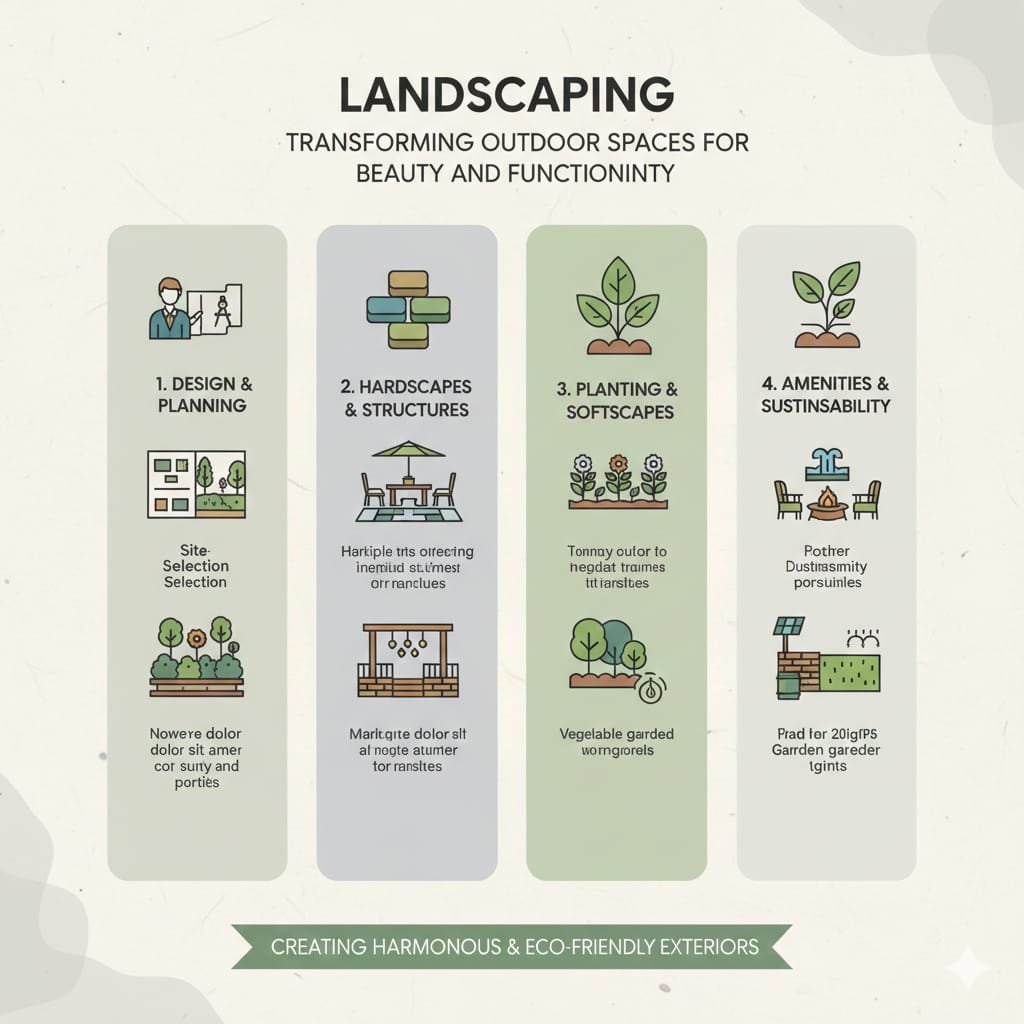
Landscaping is an art and a science that transforms ordinary outdoor spaces into visually stunning, functional, and sustainable environments. Whether you are enhancing a backyard, designing a commercial property, or creating a public park, proper landscaping blends aesthetics, ecology, and practicality. It is not just about planting flowers or mowing lawns; it involves a strategic approach to designing, installing, and maintaining outdoor areas that thrive year-round. This article explores the essential aspects of landscaping, its benefits, and effective strategies for achieving a healthy and beautiful landscape.
Understanding Landscaping
Landscaping refers to the planning, designing, installation, and maintenance of outdoor spaces to enhance their appearance, functionality, and ecological balance. It combines horticulture, architecture, environmental science, and creative design to produce landscapes that are visually appealing and sustainable.
The goal of landscaping is to create harmony between natural elements, hardscapes, and human activity. From plant selection and soil management to irrigation systems and aesthetic design, every aspect plays a critical role in achieving a landscape that is both beautiful and practical. Proper landscaping also contributes to environmental conservation, property value, and overall well-being.
Key Elements of Landscaping
Effective landscaping requires attention to multiple elements that work together to create a cohesive outdoor environment:
1. Plant Selection and Placement
The choice of plants is a cornerstone of successful landscaping. Landscaping professionals consider climate, soil type, sun exposure, and seasonal variations when selecting trees, shrubs, flowers, and ground covers. Correct placement ensures that plants thrive, provide shade, and contribute to visual balance. Native plants are often preferred for their adaptability, low maintenance, and support for local ecosystems.
2. Lawns and Turf
A well-maintained lawn can serve as the centerpiece of any landscape. Landscaping includes selecting suitable grass varieties, proper soil preparation, seeding or sodding, and ongoing maintenance such as mowing, fertilizing, aerating, and weed control. A healthy lawn provides a clean, open space for recreation and improves the overall appearance of the property.
3. Hardscapes
Hardscapes are non-living elements like patios, walkways, retaining walls, fences, and water features. Incorporating hardships adds structure, functionality, and visual interest to landscaping. Proper installation and maintenance prevent damage and integrate these elements seamlessly with natural features. Hardscapes also help manage water runoff and erosion, contributing to environmental sustainability.
4. Soil and Irrigation
Healthy soil is the foundation of any successful landscaping project. Landscaping requires testing soil pH and nutrient levels to ensure optimal plant growth. Adding organic matter, mulch, or fertilizers helps maintain soil health. Efficient irrigation systems, such as drip lines or automated sprinklers, provide consistent watering, reduce waste, and support plant growth while conserving water.
5. Seasonal Planning and Maintenance
Landscaping is an ongoing process that changes with the seasons. Seasonal planning ensures that plants bloom at the right times, lawns remain healthy, and hardscapes are protected. Regular maintenance includes pruning, fertilizing, pest control, leaf removal, and monitoring for diseases. By adapting to seasonal needs, landscaping maintains its beauty and functionality throughout the year.
Benefits of Landscaping
Investing in proper landscaping offers numerous advantages, both tangible and intangible:
- Aesthetic Appeal: Thoughtful landscaping transforms outdoor spaces into visually pleasing environments, enhancing curb appeal.
- Property Value: A well-landscaped property is often more attractive to buyers, increasing market value.
- Environmental Benefits: Landscaping prevents soil erosion, supports biodiversity, improves air quality, and reduces heat through shade and greenery.
- Well-being: Green spaces encourage outdoor activity, relaxation, and social interaction, promoting mental and physical health.
- Cost Savings: Preventive maintenance and sustainable landscaping practices reduce long-term costs related to plant replacement, pest control, and erosion damage.
Types of Landscaping
Landscaping can take many forms depending on the purpose, space, and design vision:
1. Residential Landscaping
Residential landscaping focuses on creating functional and beautiful home environments. It can include gardens, lawns, patios, outdoor kitchens, pathways, and water features. Residential landscaping balances aesthetics with usability for families and personal enjoyment.
2. Commercial Landscaping
Commercial landscaping enhances the appeal of business properties, shopping centers, hotels, and offices. It prioritizes professional appearance, accessibility, and low-maintenance designs while incorporating eco-friendly practices to reduce environmental impact.
3. Sustainable Landscaping
Sustainable landscaping emphasizes environmental responsibility. Techniques such as xeriscaping, rain gardens, composting, mulching, and native plant selection conserve resources, reduce waste, and support local ecosystems.
4. Hardscape-Focused Landscaping
Some landscapes prioritize functional hardscape elements. Patios, driveways, retaining walls, walkways, decks, and water features are carefully integrated to enhance utility and aesthetics, providing structure and long-lasting durability.
Common Landscaping Mistakes to Avoid
Even minor errors can compromise the health and appearance of a landscape. Common mistakes include:
- Using plants unsuitable for local conditions
- Overwatering or underwatering plants
- Ignoring soil health and nutrient needs
- Neglecting seasonal maintenance
- Failing to plan for long-term growth and hardscape durability
Avoiding these pitfalls ensures a sustainable, thriving landscape that continues to add value and beauty over time.
Landscaping Tools and Equipment
Proper tools make landscaping efficient and effective. Common equipment includes:
- Lawn mowers, trimmers, and edgers
- Pruning shears and hedge trimmers
- Shovels, rakes, and spades
- Fertilizer spreaders and composters
- Irrigation systems and watering tools
Using high-quality tools ensures professional results and improves safety during maintenance tasks.
DIY vs. Professional Landscaping
While many homeowners attempt DIY landscaping, professional services provide expertise, experience, and efficiency. A professional landscaping team can handle soil preparation, plant selection, installation, irrigation setup, and long-term maintenance. DIY projects may save money initially but often result in higher long-term costs and increased effort.
Tips for Successful Landscaping
- Develop a clear plan based on your goals, space, and budget.
- Understand the specific needs of plants, soil, and climate conditions.
- Use quality tools and equipment for effective maintenance.
- Integrate hardscapes and softscapes for balance and functionality.
- Implement sustainable practices to conserve resources.
- Schedule regular maintenance to prevent long-term issues.
- Consider professional guidance for complex landscaping projects.
Conclusion
Landscaping is a vital investment in the appearance, functionality, and sustainability of outdoor spaces. By combining plant care, design principles, soil management, irrigation, and seasonal maintenance, landscaping transforms ordinary spaces into thriving, beautiful environments. Whether for residential, commercial, or sustainable purposes, proper landscaping improves property value, enhances well-being, and contributes to environmental health.
By understanding the principles of landscaping and applying effective strategies, anyone can create outdoor spaces that are visually stunning, functional, and environmentally responsible. A well-executed landscape reflects care, creativity, and foresight, making every property a place of beauty and harmony.
 hamza seo